

First weeks of pregnancy: what tests should be done?

Photos: freepik.com/Freepik
The beginning of pregnancy is a special and at the same time worrying time in every woman's life. To reduce anxiety, eliminate possible risks and tailor an individual pregnancy care plan, it is recommended to undergo several important tests in the first weeks and months of pregnancy. Jana Bjornsone, a gynecologist at the Adoria Health and Beauty Center, talks about what examinations are performed in the first weeks of pregnancy in the rest of the article.
Briefly about examinations in the first weeks of pregnancy:
- First examinations: blood and urine tests, which allow you to assess the general health of the expectant mother and other important indicators.
- Visual diagnostics: gynecological ultrasonography for assessing early fetal development.
Pregnancy confirmation and first visit to a specialist
The first signs that may indicate pregnancy are usually a missed period, increased fatigue, breast tenderness, and a pulling sensation in the lower abdomen.
If pregnancy is suspected, initial confirmation can be provided by home pregnancy tests that measure the level of human chorionic gonadotropin (HCG) in the urine. However, it should be noted that these tests do not always show pregnancy in the early stages. For more accurate results, HCG levels can also be determined by having a blood test done in a laboratory - this method is much more sensitive and can confirm pregnancy in its very early stages.
In addition to HCG, sometimes progesterone levels are also determined in the blood - its indicators can provide additional information about the development of pregnancy in the early stages, especially in cases where there have been complications in the anamnesis or there are concerns about the preservation of the pregnancy. However, in order to gain complete confidence, exclude the risk of ectopic pregnancy and initiate the necessary care, it is important to visit a gynecologist in a timely manner.
Pregnancy registration can be started from the 8th week of pregnancy, counting from the first day of the last menstruation. During this visit, a detailed medical history is taken, which includes information about previous pregnancies, childbirth, previous illnesses, chronic diseases in the family, medications used, and lifestyle habits.
A gynecological examination is also performed to assess the size and condition of the uterus, and smears are taken for analysis, such as oncocytological examination, if it has not been performed within the last year. This visit is the basis for the future pregnancy monitoring plan.
- Anxiety about the upcoming birth is natural, but timely preparation will help reduce it, not only practically, but also physically and emotionally. Get tips on how to prepare for childbirth by reading the article prepared by our specialists: “Childbirth preparation course: how to prepare for childbirth?"
Essential laboratory tests in early pregnancy and their importance for quality care of pregnant women
Schedule a gynecologist appointment

Photo: adoria.lv
Laboratory tests in the first weeks and months of pregnancy provide important information about the health status of the expectant mother and possible risks. After the first visit, several blood and urine tests are ordered.
- Determination of hCG and progesterone levels in the blood: is performed to confirm pregnancy, especially in the early stages, or to assess the dynamics of pregnancy development if complications are suspected. Typically, a rapid increase in HCG levels (often doubling every 48–72 hours) in early pregnancy indicates normal development, while sufficient progesterone levels are essential for successful embryo implantation and pregnancy maintenance.
- Complete blood count: helps assess hemoglobin levels (to rule out anemia), leukocyte and platelet counts, which provide insight into overall health status and immune system function;
- Blood type and Rhesus (Rh) factor determination: essential to identify possible Rh incompatibility between the expectant mother and the fetus, which can cause complications for the normal course of pregnancy. If the Rh factors of the mother and fetus are incompatible, the mother's body may begin to produce antibodies that attack the fetus's red blood cells, causing health problems for the fetus, especially in future pregnancies. If the pregnant woman is Rh negative and the fetus is Rh positive, specific prophylaxis is adjusted;
- Infection screening: HIV, syphilis, and hepatitis B testing are mandatory. Depending on risk factors, other infection tests may also be recommended, such as hepatitis C, toxoplasmosis, cytomegalovirus, or rubella (if vaccination status or past illness is unknown). Early diagnosis of infections is critical to initiate timely treatment and reduce risk to the fetus.
- Blood glucose level: helps identify the risk of gestational diabetes early.
- Urine tests: are performed to detect the presence of protein, glucose, leukocytes, and bacteria, which may indicate kidney problems, urinary tract infections, or other health complications. Urinary tract infections are common during pregnancy and, if left untreated, can lead to serious complications, so early diagnosis is very important.
First trimester ultrasound and other specific examinations
First trimester ultrasound is one of the most important diagnostic tests for pregnant women. Usually, the first ultrasound is performed between the 6th and 9th week of pregnancy, and the main goals of this examination are:
- exclude ectopic pregnancy;
- determine the number of fruits (one or more);
- assess the fetal heart rate;
- to clarify the gestational age by taking fetal measurements;
- assess the condition of the uterus and ovaries.
The second essential ultrasound examination for pregnant women in the first trimester is performed between the 11th and 13th (+6 days) weeks of pregnancy. During this examination, the so-called first trimester combined genetic screening is performed. It includes ultrasound measurement of the fetal nuchal fold and nasal bone, as well as assessment of other fetal structures, in combination with the determination of specific biochemical markers (PAPP-A and free ß-HCG) in the maternal blood.
- determine the approximate date of birth;
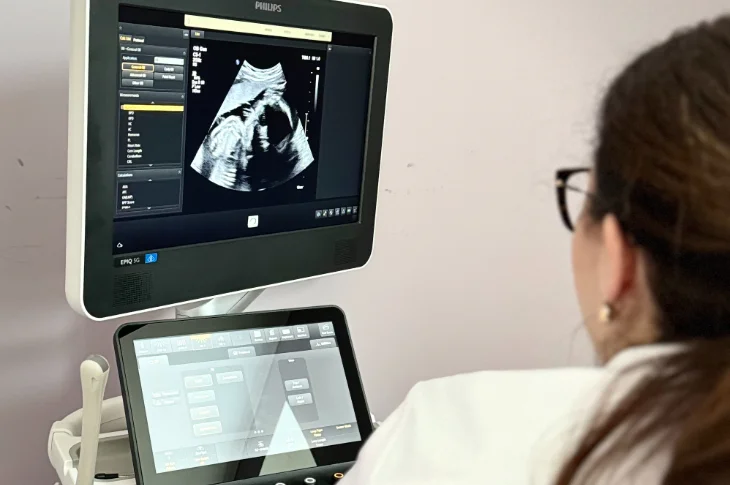
Photo: adoria.lv
This comprehensive test helps to assess the risk of Down syndrome and other chromosomal abnormalities. Based on the results of the 1st screening, additional tests may be recommended, such as non-invasive prenatal testing (NIPT) from maternal blood or invasive diagnostic methods (chorionic villus sampling or amniocentesis), if the risk is increased. These decisions are always made individually, in consultation with a specialist.
It is important to remember that regular check-ups and specialist consultations are necessary throughout pregnancy, not just in the first weeks. Each trimester has its own specific examinations and monitoring plan, which is adapted to individual needs, ensuring comprehensive pregnancy care.
- Get general recommendations for a healthy diet during pregnancy – from recommended products to general tips for a healthier menu – by reading the article: "Pregnancy diet: what to eat and what to avoid?"
Gynecology in Riga, at the Health and Beauty Center Adoria
When planning a pregnancy, it is important to choose a reliable medical institution where you can receive professional and quality care for pregnant womenHealth and beauty center Adoria gynecology in Riga, A. Čaka Street 70-3 offers state-funded care for pregnant women – the latest generation of diagnostic equipment, experienced specialists and an individual approach both during pregnancy and the postpartum period. Book an appointment now!
Comments are closed