Our story
From the idea of a welcoming clinic to its 20th anniversary: the story of the “Adoria” brand
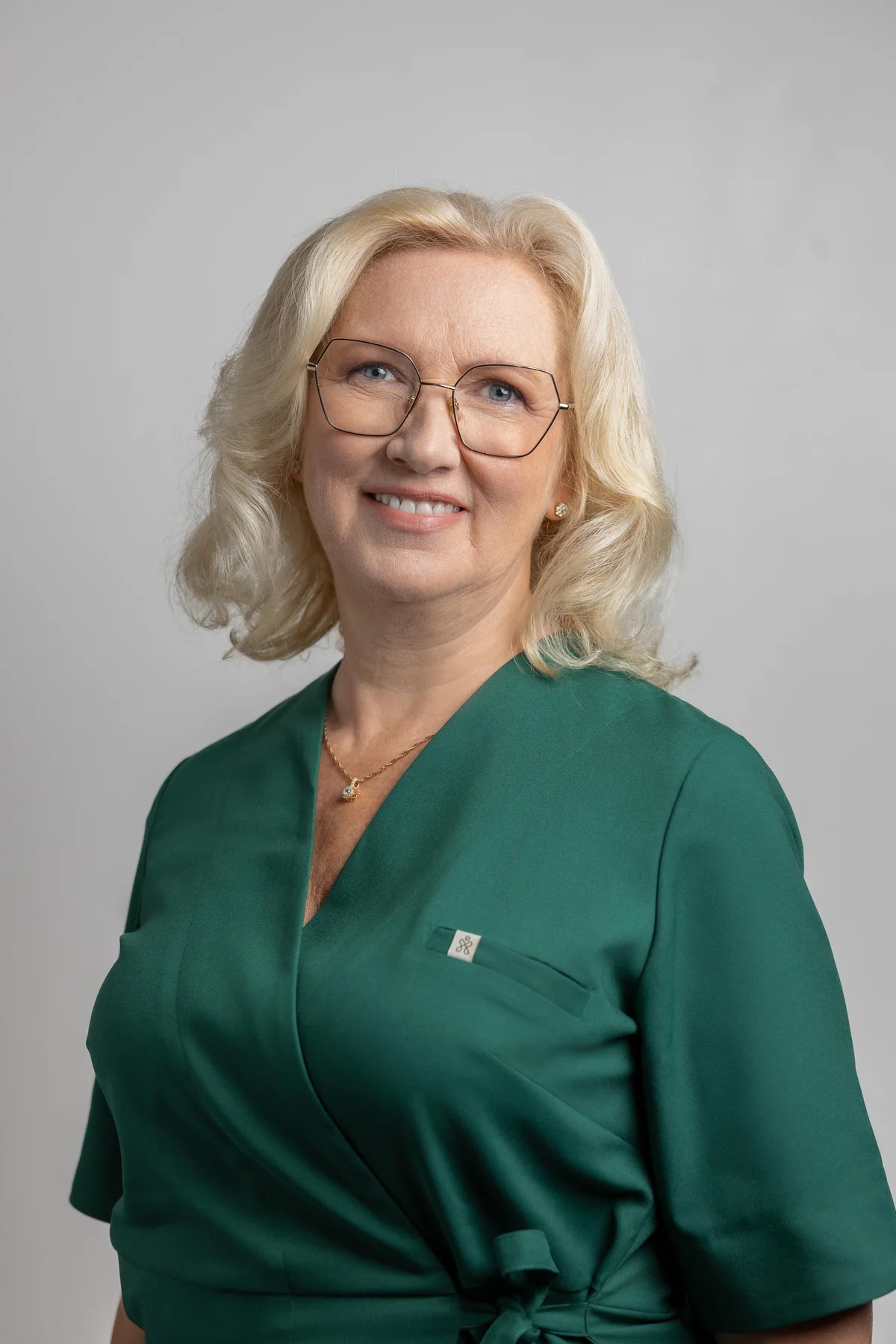
What makes a person return to one specialist for years, yet leave another after the very first visit? Private medicine has become a natural choice in Latvia, but less than 30 years ago it barely existed. Family doctor Ārija Lāce, founder of the health and aesthetics clinic “Adoria”, which celebrates its 20th anniversary this year, puts it this way: knowledge is a prerequisite, but people come back to where they get what they expect.
She wanted to do things differently
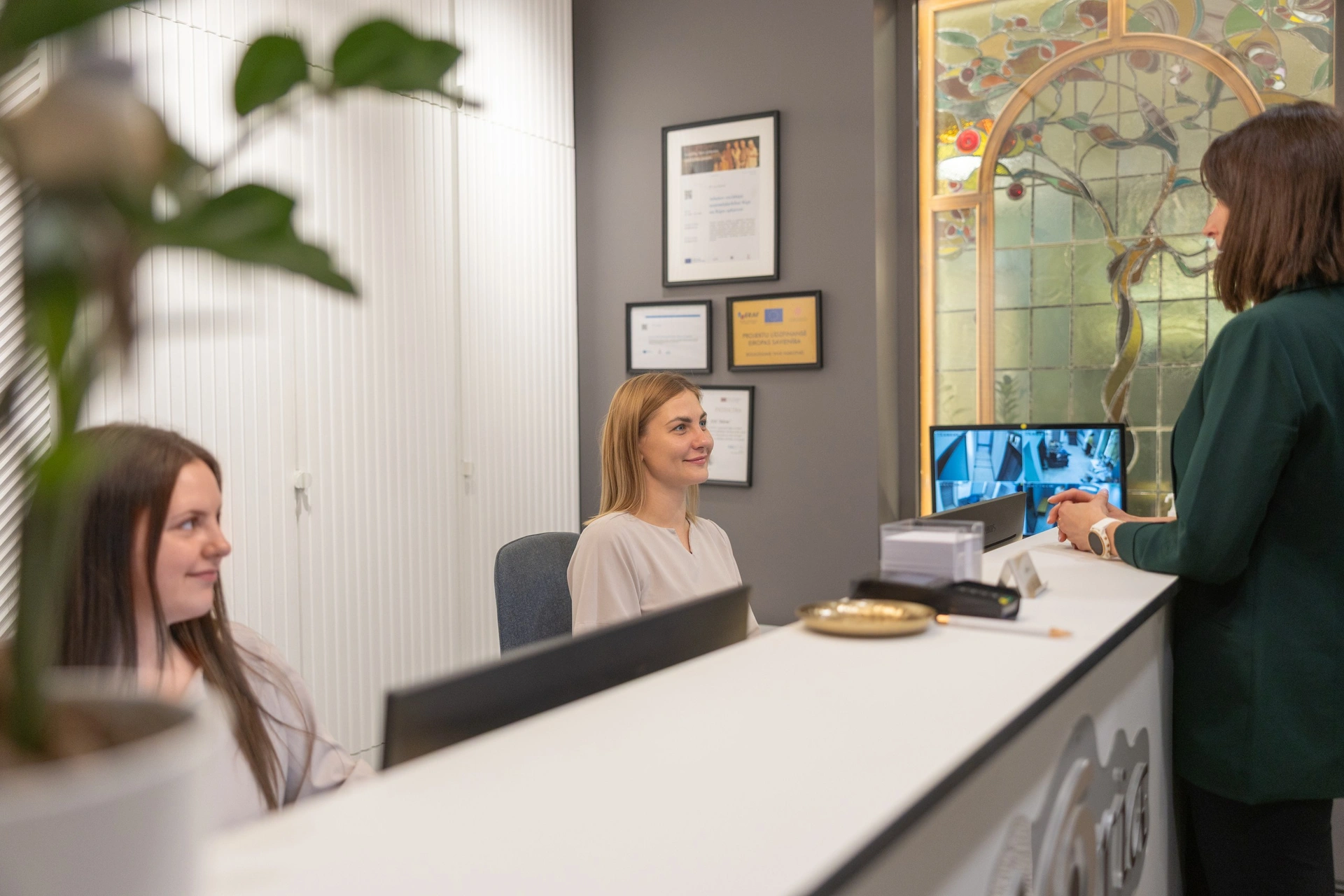
In 1996, during her residency, Ārija Lāce began working with Andris Lasmanis, Latvia’s first family doctor and one of the founders of family medicine in the country, and saw that a doctor’s work could be organised differently from what was customary at the time. “I wanted to create a place like that,” she recalls. The core of the idea was simple: a welcoming environment where a person is given both time and expertise, and feels not as if they were in a polyclinic, but almost at home.
The road from that idea to a clinic of her own was a long one. While working as a doctor, she also had to learn business and management, as it was clear that a medical degree alone was not enough to run a company. Finding suitable premises took about two years.
In 2006 a loan was taken out, and two years later the financial crisis hit. At the time, paid medical care was affordable mainly for people with health insurance policies — and it was precisely the number of these policies that fell sharply during the crisis. Yet the clinic survived, and Ārija Lāce stresses that a patient’s decision to return depends not only on the quality of the work, but also on attitude: “People come back to where they get what they expect — above all, a humane attitude, but of course also knowledge and quality.” This insight later became the clinic’s guiding principle, and the company also weathered the crises that followed.
The name has a story too
In search of a resonant and meaningful name for the future clinic, the choice fell on Latin, the traditional language of medicine. Ārija Lāce got hold of a thick Latin dictionary and leafed through it from cover to cover. There she found the word adoria, which means glory, honour and excellence. One benefit nobody had planned at the time: the name begins with the letter A, which made the clinic easier to find in alphabetical listings and internet search engines.
The clinic’s visual identity was created by artist Dace Liepa, and the golden apple in the logo is more than a decorative element. It is based on a fairy tale written especially for the clinic, about a girl who grows an apple tree from a tiny seed, and about a golden apple that appears only after nine years.
The idea behind the tale echoes how the medical company itself came to be. Growing apples takes time, patience and work, but the most valuable part comes last: when the golden apple is finally picked, the girl does not keep it for herself, but gives it to those who need it more. The care once invested sooner or later returns to people as fruit.
The values have not changed
Ārija names three principles that have defined the clinic since the day it was founded.
- Environment and attitudeWelcoming premises and kind people.
- QualityĀrija is very specific about it: “High-quality equipment and materials. We never choose the cheapest option just because of the price.”
- SpecialistsThe third and, in her view, the most important principle. What matters is not only knowledge, but also the ability to talk to people so that they understand what the doctor is doing and why. “Patients need to understand what is happening to them and get answers in plain language,” the doctor stresses.
The same applies to the team: the clinic believes that how an employee feels is directly linked to what the patient receives in the treatment room, because someone who feels good at work is able to give others their very best. New specialists, too, are assessed on both counts: professional fit and attitude.
Why health and aesthetics under one roof?
The fact that the clinic’s name includes aesthetics alongside health is not a marketing decision. “I have always believed that it is important not only to give the patient a pill, but also to try to understand where the problem comes from,” the doctor explains. Sometimes what is needed is physiotherapy, massage or other help rather than a prescription.
Ārija Lāce views beauty care in the same way. If a person feels good when looking at themselves in the mirror, it reduces stress and improves well-being — and so aesthetics becomes part of care rather than a separate basket of services. In practice, this means that specialists from different fields complement one another, and patients receive much of the help they need in one place.
20 years, and the story continues
Over time, “Adoria” has grown into a strong family business. Although the founder’s daughter, Dana Zālīte, was initially reluctant to work at the clinic after finishing secondary school and went on to study economics and law, she returned to her family roots. Today Dana runs and expands the company, having grown the dentistry department from a single treatment room to five, fitted with modern equipment and technology. She is also involved in recruiting specialists, meeting potential colleagues and making sure of their attitude and communication skills.
Ārija Lāce admits that the involvement of the next generation has also brought something harder to measure: “When you see that your children can see the future and continuation of this work, the company gets a second wind.”
There is a similar continuity on the patients’ side too, and it is a value that cannot be written into any business plan. A young person walks into the treatment room with their own child, and you remember that 20 years ago they were here as a baby in their mother’s arms. “It’s a fantastic feeling!” says Ārija. “It means that the person felt warmly welcomed here and wants to come back.” In her view, this is the strongest proof that the chosen path was the right one.
Twenty years on the “Adoria” journey are not merely a unit of time. They are years in which a team has been built that has grown together with its patients, and in which more than one challenge has been overcome. Perhaps it is precisely the ability to preserve the original idea — to create a place where people feel welcome — that has allowed “Adoria” to keep telling its story after 20 years.