
Dental Implant Procedure: How It Works and What to Expect

Photo: freepik.com/Freepik
Dental implant treatment is an innovative solution for tooth loss, allowing patients to restore and even improve the aesthetics of their smile and the natural function of their teeth. In this article, dentist Darja Gvergžde from the Health and Beauty Centre Adoria provides a comprehensive overview of the dental implant placement process, explaining how the procedure proceeds and the nuances of post‑operative care.
Why Choose Dental Implants?
- Effectively restore missing teeth, facial contours and the natural aesthetics of the smile.
- Significantly improve chewing function and articulation.
- Made from biocompatible materials, offering a high‑quality long‑term solution.
What Are Dental Implants and Why Choose Them?
Dental implants are an innovative and effective solution for replacing lost teeth. They are made from a biologically inert and durable material – titanium – which ensures excellent biocompatibility with the human body and a minimal risk of allergic reactions. During a surgical procedure, the dental implant is precisely placed into the jawbone, where it functions as a stable base for fixed prostheses such as crowns, bridges or even full dentures.
This method differs fundamentally from traditional removable dentures, because dental implants gradually integrate into the jawbone, forming a completely stable and permanent replacement for the missing tooth or teeth. This biological process, known as osseointegration – the direct fusion of bone with the implant surface – is the key prerequisite for the success of dental implant therapy.
Dental implants not only restore the natural smile aesthetically and harmonise the facial profile, but also fully restore essential functions such as chewing and clear speech, which are often impaired after tooth loss. In addition, by placing dental implants, the physiological load on the jawbone is effectively stimulated, thus preventing bone atrophy and loss which is a common occurrence after tooth extraction and can negatively affect the appearance of facial features and promote premature aging. Dental implants also help maintain the stability of adjacent teeth, preventing their displacement and ensuring a proper bite.
Compared with conservative dental methods, such as root canal treatment, which aim to preserve an existing but problematic tooth, dental implantation is a rational and predictable solution in cases where the tooth is irreversibly lost or cannot be restored.
Although the initial financial investment in dental implant treatment may seem significant, long‑term this choice often turns out to be more economical and comfortable, considering the outstanding durability, functionality and minimal maintenance needs of dental implants.
- Thanks to their long lifespan, dental restoration with dental implants is considered the most effective solution in modern dentistry. Read the article "How long do dental implants last?" and find out more about this technology!
Dental Implant Placement: The Procedure Step by Step
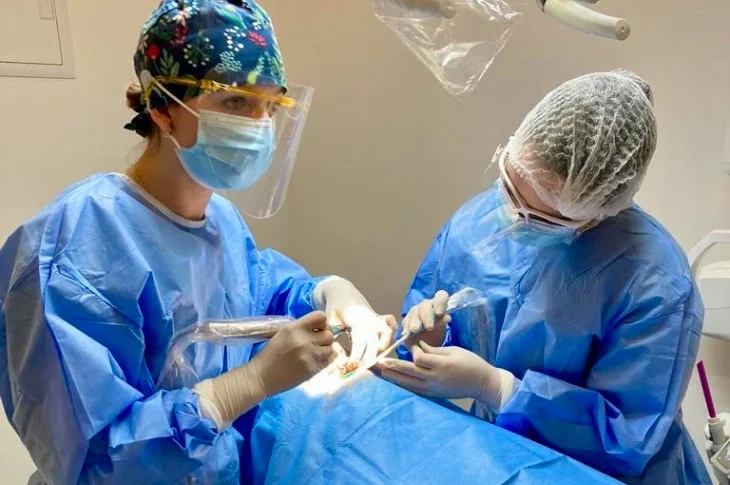
Photo: adoria.lv
Dental implant placement is a carefully developed and meticulously planned treatment process that includes a sequence of stages. The total treatment duration can range from several months to a year, depending on each patient's individual clinical situation and the need for additional interventions such as augmentation – increasing the volume of bone tissue.
- Consultation and thorough diagnostics: the first and most important step is a detailed consultation with a dental implantologist. During this visit, the specialist carefully evaluates general health, the condition of the teeth and gums, and the volume and density of the jawbone. A 3D radiographic examination is mandatory, providing a precise three‑dimensional image of the jawbone and allowing exact planning of the implant position, size and angle. At this stage, an individualised treatment plan is developed, taking into account the patient's wishes and medical needs, and the associated dental fees and course of the procedure are discussed in detail.
- Surgical implant placement: the procedure is usually performed under local anaesthesia. The dentist makes a small incision in the gums to access the jawbone. Using special instruments and drills, a prepared site is created in the jawbone and the titanium implant is inserted. If necessary, at the same time as implant placement, bone grafting, soft tissue grafting or placement of artificial bone material may be performed to ensure adequate support and stability. After implant placement, the wound is carefully closed and sutured. All manipulations are carried out under sterile conditions, adhering to strict infection control principles to minimise the risk of post‑operative complications.
- Osseointegration – the healing period: after the surgical intervention, the healing period begins, which is crucial for the successful integration of the implant into the bone. This process can last several months (3–6 months), depending on the bone condition and individual healing dynamics. During this time, the titanium implant gradually fuses with the surrounding bone, forming a stable and durable foundation for the placement of prosthetic restorations. Temporary prosthetic solutions can be used during this period to ensure comfort and aesthetics.
- Fabrication and placement of restorations – crowns or bridges: in the final treatment stage, custom prostheses – dental crowns or bridges – are fabricated according to the patient's clinical situation, the extent of the dental arch defect and aesthetic requirements. The completed restorations are then precisely attached to the abutments, restoring the functionality and aesthetics of the dental arch.
After Dental Implant Placement
After dental implant placement, it is normal to experience some discomfort, swelling and mild pain in the first few days. These symptoms can be effectively reduced with painkillers recommended by the dentist. It is important to carefully follow the dentist's instructions regarding oral hygiene and care to ensure rapid and successful healing.
The First 24 Hours After Surgery
- Do not rinse the mouth: you should avoid rinsing the mouth for two days after the operation, since this can interfere with blood‑clot formation, which is essential for the healing process.
- Gentle tooth brushing: teeth should be brushed gently, avoiding direct pressure and excessive friction over the surgical area.
- Antibacterial mouth rinse: the dentist may recommend using an antibacterial mouth rinse, which should be used according to the instructions, typically 2 times a day, gently swishing the mouth for about 60 seconds starting from the 3rd day.
- Diet: for the first days after surgery, it is recommended to eat soft foods and avoid hot, hard or very spicy foods that could irritate the surgical site.
- Smoking and alcohol: avoid smoking and alcohol consumption, as they can negatively affect the healing process.
The Following Days and Weeks
- Gentle oral and dental hygiene: teeth should continue to be brushed twice a day using a soft‑bristled toothbrush and fluoride‑containing toothpaste. It is important to clean all teeth gently but thoroughly, paying particular attention to areas located away from the surgical site. The region around the implant requires care and avoidance of direct pressure on the gums over the implant.
- Antibacterial mouth rinse: continue to use the antibacterial mouth rinse as instructed by the dentist. Typically it is used 1–2 times a day during the first 1–2 weeks after surgery, or longer if recommended by the specialist.
- Pain and discomfort: mild discomfort and pain are normal after surgery. If pain worsens or other unusual symptoms appear, such as strong swelling, bleeding or pus formation, you should contact your dentist immediately.
Read more about proper dental care and prevention in the article "Maintaining Dental Health: Specialist Tips", which details effective methods and recommendations for maintaining dental health in everyday life.
Photo: adoria.lv
Adoria – Your Smile Is Our Priority!
The Health and Beauty Centre Adoria carries out dental implantology procedures using the latest technologies and the highest‑quality materials. Contact us today to learn more about options for dental restoration, dental fees and schedule a consultation with our experienced specialists!