
Does Fluoridation Really Help Prevent Caries?

Photo: freepik.com/Freepik
One of the most effective methods in modern dentistry for preserving dental health is fluoridation, which helps to protect the tooth surface from the effects of acids and from damage caused by bacteria. This procedure is applied both to children and to adults, in order to ensure long-lasting protection of the enamel and to reduce the risk of caries forming. In the continuation of the article, Anita Preisa, a dental hygienist at the Adoria Health and Beauty Centre, explains how effective this method is and why it is essential for the health of the oral cavity.
In this article you will learn:
- Strengthening the enamel: in what way do fluorides affect the resistance of dental tissue to external irritants.
- Caries prevention: why does fluoridation not infrequently provide more effective caries prevention compared with the use of everyday oral care products.
- Prevention of children's dental health: why regular visits to a dental hygienist are the foundation of caries prevention in children, and how professional fluoridation additionally helps.
Why is fluoride necessary for teeth at every age?
Fluorides are natural minerals that take part in the process of tooth enamel renewal, which in medicine is called remineralisation. In the oral cavity a continuous struggle takes place every day between the loss of minerals and their renewal, which is influenced by diet, the composition of the saliva and hygiene habits. If the loss of minerals is greater than their uptake, the enamel becomes porous and unprotected, creating a favourable environment for the development of caries. That is why additional fluoride for the teeth is an essential element that helps to repair micro-damage even before a cavity has formed in the tooth.
Professional tooth fluoridation provides a far higher concentration of the active substance than ordinary tooth and oral care products, delivering intensive protection. This procedure is particularly useful for people with an elevated risk of caries, sensitive tooth necks or enamel erosion.
What are the main benefits of professional tooth fluoridation?

Photo: freepik.com/Freepik
Many patients wonder whether fluoridation is a justified choice if a fluoride-containing toothpaste is used every day. The answer lies in the effectiveness of the procedure – the preparations used in dentistry bind to the tooth surface for a longer period, forming a stable protective layer that gradually releases minerals into the tissue. This not only hinders the ability of bacteria to produce acids, but also makes the enamel harder and more resistant to the effects of acidic foods and drinks.
- Remineralisation: the calcium and phosphorus compounds in the structure of the tooth enamel are restored, filling in microscopic cracks.
- Reduction of sensitivity: the procedure helps to seal the open dentinal tubules, which often cause pain at cold/hot temperatures or from other external irritants.
- Long-term protection: the fluoride barrier that is formed persists for several months, continuously strengthening the outer layer of the tooth.
In order to ensure the best result, professional dental hygiene is always carried out before fluoridation, in order to clean away plaque and tartar. Only on clean teeth can fluoride preparations act with maximum effectiveness, gaining full access to all tooth surfaces. Scientific studies confirm that in combination with correct cleaning habits this method is able to prevent caries in up to 60% of cases.
Is treating caries at home possible without a specialist's help?
It is essential to distinguish preventive protection from the elimination of damage that already exists, because the notion of how the treatment of caries at home proceeds is often mistaken. It all begins with the correct choice of everyday care products – many people still do not use fluoride-containing toothpastes, which is the first and most important step in protecting the enamel. If that is insufficient, a specialist may recommend additional products, for example, mineralisation gels.
These are not ordinary pastes, but rather special concentrates which, like a "course of vitamins", help to restore the level of minerals in the enamel; however, they may only be used at the initial stage, when a cavity has not yet formed in the tooth. At this stage the tooth has only lost the necessary minerals, and with correct care this process can be turned around. However, if bacteria have already formed a cavity in the tooth tissue, the only solution is a visit to the dentist, because enamel does not regenerate by itself and cavities do not grow over.
- Caries prevention at home involves the correct tooth-brushing technique and the choice of suitable products, which is discussed in more detail in the article on "What are the basic principles of dental hygiene that must be followed in the everyday oral care routine".
When trying to choose therapeutic products at the pharmacy on your own, there is a risk of making a mistake with the composition or the concentration, which in the particular situation may not deliver the expected effect. That is why it is far wiser to consult a dental hygienist or a dentist, who will assess the condition of the enamel and give recommendations both for the choice of dental care products and for the need for a fluoridation procedure.
How is tooth fluoridation carried out in the dentist's office?
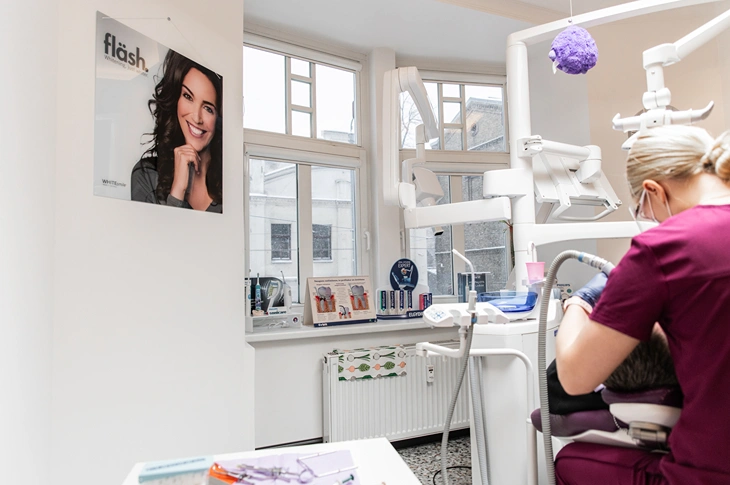
Photo: adoria.lv
Fluoridation is a painless and comparatively quick process, during which special concentrates are used. These products contain fluoride ions which, on coming into contact with the tooth tissue, form a new, stronger mineral compound – fluorapatite. This new compound is far more resistant to acids than the natural hydroxyapatite of which enamel consists, thereby creating heightened resistance to everyday mechanical and chemical loads. The fluoridation process usually involves several steps:
- Preparation of the tooth surface: the surface is carefully polished and dried, so that nothing hinders the uptake of minerals.
- Application of the preparation: depending on the patient's needs, a special enamel-sealing liquid is applied, which remains on the teeth for a certain time.
- Aftercare instructions: after the procedure it is usually not permitted to eat or rinse the mouth for at least 30 minutes, so that the preparation has time to take full effect.
The usefulness of fluoridation is particularly high after orthodontic treatment, when the braces have been removed and the enamel may be demineralised in places. In such cases professional fluoridation helps to regain the density of the tissue and to prevent sensitivity. This method likewise provides the necessary protection if the patient is faced with receding gums, which expose the tooth roots, which are not protected by enamel and are highly susceptible to damage from caries.
The importance of regular visits to a dental hygienist in the prevention of children's dental health

Photo: freepik.com/Freepik
In childhood, the foundation of oral health is laid not only by everyday tooth brushing, but also by regular visits to a dental hygienist no less often than once every six months. The enamel of milk teeth is considerably thinner and more fragile than that of adults, and therefore caries bacteria are able to damage it far more rapidly.
Professional dental hygiene for children is a gentle procedure, during which the specialist not only cleans away accumulated plaque, but also applies protective minerals which help the new teeth to become more resistant to acids. Special attention is needed at the moment when the first permanent teeth begin to erupt. In the first years after they appear, they are not yet fully mature, and therefore additional strengthening with fluoridation helps them to become harder and more durable for a lifetime. Regular prevention in childhood provides several essential benefits:
- Strengthening of the enamel: the uptake of minerals takes place immediately after the tooth erupts, helping to form a natural "shield" against damage;
- Plaque control: the specialist helps to clean the places that are hard for a child to reach at home, preventing bacteria from accumulating and damaging the enamel;
- A positive attitude towards dental care: by visiting the hygienist preventively, the child becomes accustomed to oral examinations and manipulations, which in the future prevents fear of the dentist.
Many parents look for answers to the questions of from what age fluoridation can be carried out on a child and how to prepare for the procedure, which can be read about in more detail in the blog “Tooth Fluoridation for Children and Adults: What You Need to Know Before the Procedure?”.
Take care of your own and your children's dental health preventively already today!
At the Adoria Health and Beauty Centre, oral health specialists apply an individual prevention plan to every patient, based on the actual condition of the enamel and the level of caries risk. Professionally performed fluoridation guarantees that medically certified, high-concentration preparations are used, the application of which is strictly controlled, ensuring maximum effectiveness without any risks to health. Book a visit with our specialists by calling +371 67 315 000 or by filling in the application on the website, and see for yourself that professional care for the tooth enamel is the safest investment in a healthy smile!