
How often and for how long should you brush your teeth with an electric toothbrush?
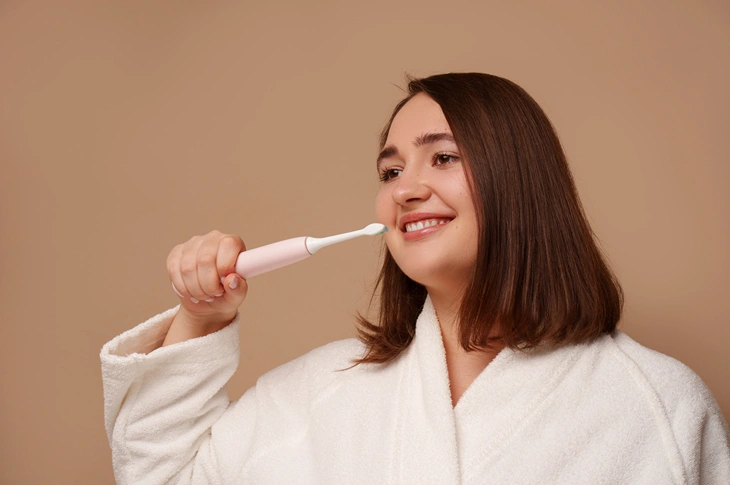
Photo: freepik.com/Freepik
Modern technology has significantly eased daily oral hygiene care, and electric toothbrushes are becoming an increasingly popular choice for effective plaque removal. However, to achieve a flawless result and avoid enamel damage, buying the device alone is not enough – proper rules of use must be followed.
About how often and for how long you should brush your teeth with an electric toothbrush in order to ensure maximum cleanliness without harming the gums – Ieva Breča, dentist at the Adoria Health and Beauty Centre, explains in the rest of the article.
In this article you will learn:
- Tooth brushing time: what is the optimal time needed to thoroughly clean all tooth surfaces.
- Correct technique: how hand movements and pressure differ when using an electric device compared to a manual brush.
- Frequency of use: how many times a day it is recommended to brush your teeth and why excessive zeal can be harmful.
How long should you brush your teeth with an electric toothbrush?
One of the most common myths is the belief that the power of an electric toothbrush allows you to reduce brushing time. In reality it is exactly the opposite – although the device makes more movements, it requires patience and precision. Haste is the greatest enemy of oral hygiene, because by carelessly gliding over the row of teeth, a microscopic layer of bacteria is left behind.
For the procedure to provide a real benefit and for no questions to arise about how often you should brush your teeth with an electric toothbrush, the "gold standard" must be followed – two minutes, twice a day. Most modern devices are equipped with a timer that helps maintain this discipline by dividing the process into logical stages.
- The quadrant principle: the oral cavity is conditionally divided into four parts – the right and left sides of the upper jaw, the right and left sides of the lower jaw. Every 30 seconds the timer signals that it is time to move on to the next zone, guaranteeing even cleanliness.
- Breaking down plaque: bacterial colonies on the teeth form a dense and sticky layer of plaque. In order for the bristles of the electric toothbrush to be able to fully break it down and clean it, they must be in contact with the tooth surface for a certain time.
- Tartar prevention: if the necessary time is not observed, the soft plaque that remains on the enamel (especially near the gums and molars) begins to mineralise within 24–48 hours. Over time it turns into hard tartar, which can no longer be removed with a brush – it can only be done by a dental hygienist.
How often should you brush your teeth with an electric toothbrush?
Although careful oral hygiene is the foundation of oral health, excessive zeal can cause harm. The answer to the question of how often you should brush your teeth with an electric toothbrush is unchanging – twice a day, in the morning after breakfast and in the evening before bedtime. Brushing more often than three times a day, especially if force is applied, can promote gum recession and enamel wear.
Electric toothbrushes are very powerful, so their effect on the tissues is more intense. If during the day there is a desire to freshen your breath or get rid of food residues, it is better to use dental floss and a mouth rinse or simply rinse your mouth with water.
Special caution should be taken after consuming acidic products (fruits, juices, wine) – at this moment the enamel is slightly softer, so immediate, intensive brushing with an electric brush can promote tooth erosion. In such cases it is recommended to wait at least 30–60 minutes after eating.
- Learn more about what the most essential advantages of an electric toothbrush are, and in which cases a manual brush is still an effective alternative, by reading the article “Which toothbrush to choose – electric or manual?”.
How does tooth brushing technique change when switching to an electric device?

Photo: freepik.com/Freepik
When switching to an electric toothbrush, the greatest challenge is often not the question of how often and for how long you should brush your teeth with an electric toothbrush, but rather the need to change the hand movement that has been habitual for years. If with a manual brush we are used to making active, sweeping motions, then an electric device requires a completely different approach – it does all the "mechanical work" itself.
The task is no longer to mechanically clean the teeth, but to precisely guide the device, allowing the rotating or vibrating head to do its job. For the process to be effective and gentle, it is recommended to follow these basic principles:
- The correct angle: the toothbrush head should be held at approximately a 45-degree angle to the gum line. This is important so that the bristles can reach not only the tooth surface, but also the zone beneath the gum margin, where bacteria most often hide.
- Slow and smooth movement: the brush should be moved slowly from one tooth to the next, following the natural shape of the tooth and lingering on each surface for a couple of seconds.
- Cleaning all surfaces: all three planes must be treated equally carefully – the outer (visible when smiling), the inner (on the tongue side) and the chewing surface. It is precisely the inner surfaces that are often neglected, even though tartar forms there the fastest.
- The correct pressure: pressing the brush hard against the teeth is a dangerous habit. It does not improve cleaning, but rather traumatises the gums and bends the bristles outwards, making them ineffective. Many modern models have pressure sensors that warn of too much force.
- Regular head replacement: the head of an electric toothbrush should be changed every 3 months or sooner if the bristles are frayed. Worn bristles are rough, they traumatise the gums and can no longer remove plaque properly.
When is home hygiene not enough?
Even when observing careful and regular oral hygiene, properly using a toothbrush and choosing quality oral care products, there are zones that are difficult to reach at home, for example, deep gum pockets or tight interdental gaps. This is precisely why a professional dental hygienist is an indispensable helper in maintaining oral health. The specialist not only removes the hard tartar that the brush cannot clean, but also polishes the teeth and applies fluoride-containing preparations to strengthen the enamel.
High-level dentistry in Riga, such as that provided by the Adoria Health and Beauty Centre, offers a comprehensive approach – the hygienist works in a team with the dentist, noticing potential problems in time. Regular visits help save money in the long term, because prevention is always cheaper than treatment. To get acquainted with the costs of services and plan your visit, we invite you to view the “price list” section of the website, where detailed information about all dental services is available.
A wide range of dental services for the whole family!
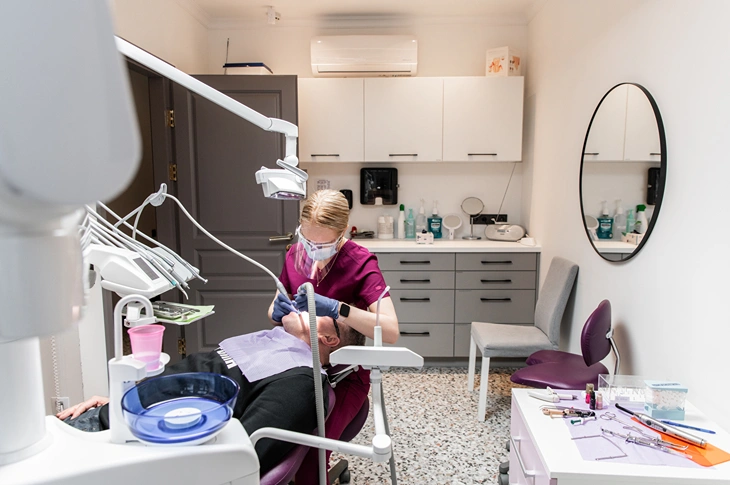
Photo: adoria.lv
The correct tooth brushing technique and regular prevention are the foundation of a beautiful smile. If you have questions about choosing an electric toothbrush or want to make sure of the state of your dental health, the Adoria Health and Beauty Centre invites you to sign up for a consultation. You can make an appointment by calling +371 67 315 000 or by filling out the application form on the website.