
How to Kill a Tooth Nerve: A Dentist Comments

Photo: freepik.com/Freepik
Tooth nerve inflammation or pulpitis is an unpleasant and painful problem that forms as a result of caries, trauma or other stomatological ailments. Although modern dentistry provides effective, modern and maximally painless caries and pulpitis treatment methods, unfortunately, specialists still encounter patients who seek solutions at home, including trying to kill the tooth nerve using various dangerous methods.
About the risks to consider when engaging in tooth inflammation self-treatment at home and how tooth nerve treatment works in the dental office, tells dentistry at the Health and Beauty Center Adoria Aleksandra Feoktistova.
Tooth Nerve Inflammation or Pulpitis: How It Forms and What Are the Symptoms?
Tooth nerve inflammation or pulpitis is inflammation of the tooth's soft tissues. Pulp, located in the tooth canals under the tooth enamel and dentin layer, consists of blood vessels, nerve tissues, connective tissues and other soft tissues. Most often, tooth nerve inflammation forms as a result of deep and already advanced caries. If caries is not treated in time, bacteria spread to the pulp, causing inflammation in the tooth's soft tissues.
Similarly, pulpitis can also form in case of severe tooth trauma, tooth root fracture, damaged artificial tooth structures, periodontitis and other stomatological problems. The most common pulpitis symptoms are:
- very sharp, pulsating, paroxysmal pain that can radiate to other facial areas as well;
- tooth pain that often worsens at night, as well as when eating or drinking hot/cold food/drinks;
- increased tooth sensitivity to sweet/sour products;
- increased tooth sensitivity to touches, taps, bites;
- tooth color change;
- in more severe cases – facial swelling, redness.
Pulpitis treatment should be started as soon as possible, because untreated pulpitis over time develops into periodontitis – inflammation of tooth bone tissues and surrounding tooth tissues. Periodontitis treatment is often a long-term and complicated process, moreover, in severe periodontitis cases, it may be necessary to decide on tooth extraction.
How to Kill a Tooth Nerve – Dangerous and Ineffective!
Tooth nerve inflammation self-treatment at home is not only ineffective, but also dangerous for several reasons:
- high infection risk: unhygienic conditions, use of non-sterile tools and various folk remedies promote infection development that can spread to other body tissues;
- nerve and blood vessel damage: any self-manipulations can cause severe nerve and blood vessel damage, as a result of which chronic pain, numbness can develop;
- more severe complications: depending on the method used, self-treatment can cause quite severe complications, such as jaw bone damage, facial nerve paralysis and even sepsis.
Unfortunately, questions about how to kill a tooth nerve at home with various folk methods appear not rarely in the virtual environment. Similarly, dentists increasingly encounter already very severe stomatological consequences caused by using such methods, without seeking specialist help in time. For example, popular but dangerous methods are:
- heating the tooth with a hot spoon or water: a method that not only promotes and accelerates the inflammation process, but can cause gum burns, promotes gingivitis and other hard-to-treat gum disease development;
- inflammation pain relief using cloves, garlic, salt solution, activated charcoal and other folk medicine remedies: using food products and various medicinal plants in case of tooth nerve inflammation is ineffective, can cause oral mucosa and gum burns, moreover promotes bacterial growth.
Root Canal Treatment or Endodontics
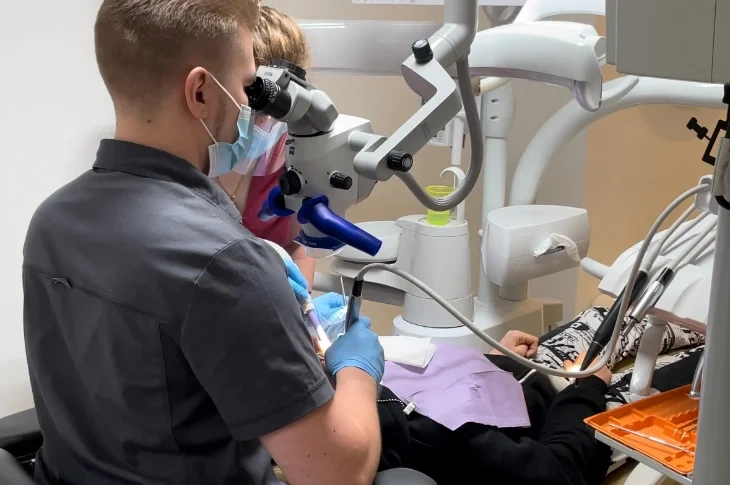
Photo: adoria.lv
Root canal treatment or endodontics is one of the most common procedures performed in the dental office. However, it is important to remember that by regularly visiting the dentist, treating minor caries damage in time, performing professional dental hygiene every six months and properly caring for teeth daily, pulpitis risk is minimized.
Endodontics nowadays is performed using modern equipment and gentle anesthesia, thus ensuring precise, comfortable and painless tooth nerve treatment. The dentistry office at the Health and Beauty Center Adoria is equipped with the latest generation dental microscope Carl Zeiss Extaro 300, which ensures root canal treatment with the highest precision, high magnification, which is especially important in complicated inflammation cases. Pulpitis treatment includes:
- carious mass removal and opening tooth canals;
- removal of damaged and inflamed nerve and blood vessels;
- thorough and precise nerve canal cleaning and disinfection to prevent recurrent infection risk;
- canal filling with special, biocompatible material that prevents bacteria from entering nerve canals;
- tooth restoration with filling or installing artificial tooth structure, such as a crown.
Although after pulp removal and canal cleaning the tooth remains non-vital, it can retain its functions long-term. However, it is important to regularly visit the dentist to rule out recurrent infection development, when root canal retreatment is necessary. However, if inflammation recurs and has spread to the tooth root part as well, it may be necessary to decide on tooth extraction.
In such cases, the dentist, together with the patient, decides on dental prosthetics of the lost tooth, installing a removable prosthesis or bridge. If prosthetics methods are not the most suitable solution, the patient can also opt for dental implant installation.
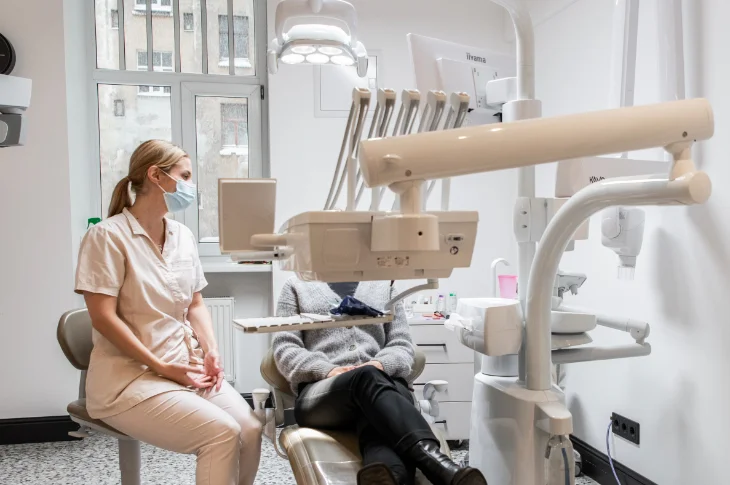
Photo: adoria.lv
Wide Range of Dental Services at Adoria Dentistry!
General dentistry, endodontics, dental surgery, prosthetics and implant installation using latest generation equipment and technologies at the Health and Beauty Center Adoria, Riga, A. Čaka Street 70-3!