
How to properly care for a child's teeth at home?
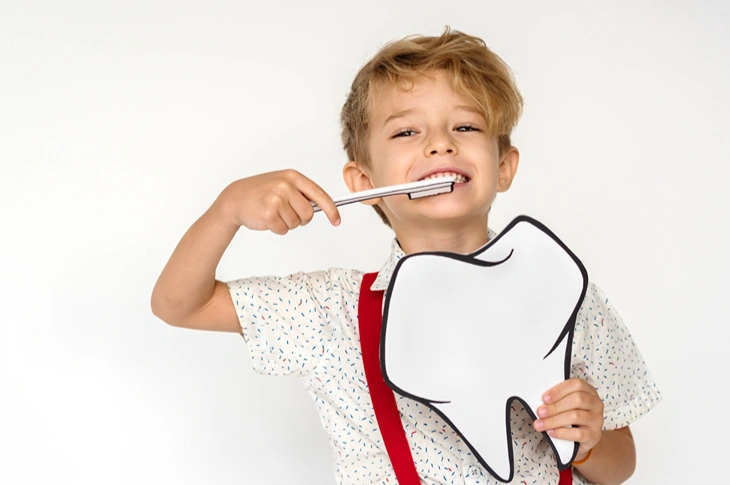
Foto: freepik.com/Freepik
A healthy smile is based on correct oral hygiene habits, which are acquired already in early childhood, ensuring the health of milk teeth and preparing the foundation for permanent teeth. Parental involvement and knowledge about how to properly care for a child's teeth is of decisive importance in caries prevention and in promoting general health. In the continuation of the article, Kristina Kuzmenkova, a hygienist at the Adoria Health and Beauty Centre, explains the most effective methods and everyday steps in caring for children's teeth and oral cavity
In this article you will learn:
- Starting hygiene: when exactly to begin caring for oral cavity hygiene in infancy.
- Basic principles of care: what steps to follow daily so that a child's teeth are protected from caries.
- Choosing products: how to navigate the wide range of toothpastes and toothbrushes according to the child's age.
When to start cleaning a child's teeth and why is it important?
One of the most frequent questions that new parents face is related to the time when to start cleaning a child's teeth in order to ensure maximum protection against the risk of caries. Specialists emphasise that oral cavity care must be started even before the appearance of the first tooth, gently cleaning the infant's gums with a soft, moistened gauze cloth or a special silicone finger cot.
As soon as the first little tooth appears, oral cavity care must become an integral part of the baby's care, using a soft toothbrush suitable for the child's age. The first milk teeth are especially sensitive to acids and bacteria, because their enamel is considerably thinner than in adults.
Knowledge about how to properly care for a child's teeth helps to avoid so-called "bottle caries" and other early forms of enamel damage. Starting hygiene in a timely manner not only maintains oral health, but also accustoms the baby to new sensations, reducing anxiety and resistance to dental care and examination at a later age.
How to choose the most suitable products for children's dental care?
For daily hygiene to be effective and safe, the correct choice of tooth and oral care products is of great importance, where the main criterion is the child's age and individual needs. It is important to remember that when a child brushes their teeth independently, parents must re-brush them at least until the age of 10–12, because until this time the child's hand motor skills are not yet sufficiently developed to fully clean all tooth surfaces. Quality children's dental hygiene at home is the foundation on which all further oral cavity health is based.
When choosing care products, it is advisable to be guided by the following basic principles:
- Toothpaste with fluorides: from the first little tooth until the age of two, a children's toothpaste containing 1000 ppm of fluoride should be used in a rice-grain amount, but from the age of two – in a pea-sized amount, in order to effectively strengthen the enamel.
- Toothbrush: choose a brush with a small head suitable for the baby's age and very soft (supersoft or ultrasoft) bristles that protect the gums. As milk teeth change to permanent ones, the size of the brush should gradually be increased.
- Dental floss: interdental cleaning with special children's dental floss sticks should be started at the moment when the child's teeth begin to touch closely. If there are no longer any gaps between the teeth, an ordinary brush cannot get in there, so flossing in the evenings is the only way to clean out the accumulated plaque.
- Mouthwash: it may only be started from the age of six, when the child has learned to spit the liquid out completely and not swallow it. It must be alcohol-free and with a fluoride concentration suitable for the child.
Knowledge about how to properly care for a child's teeth also includes the understanding that mouthwash is only a supplement, not a substitute for mechanical cleaning. If a child has tightly spaced teeth, the use of dental floss in the evenings becomes a mandatory step in caries prevention, because it is precisely damage to the interdental surfaces that develops most rapidly. So that the child forms positive associations with dental care, it is worth using game elements, hourglasses or special mobile apps that will make the few-minute cleaning process more engaging.
Why is milk teeth care just as important as caring for permanent teeth?
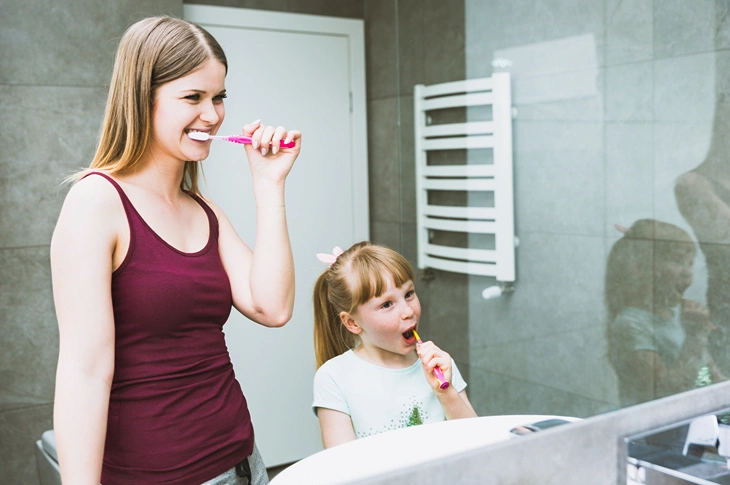
Foto: freepik.com/Freepik
In society there still exists a myth that milk teeth do not need to be cleaned so carefully, because they will fall out anyway, but medical facts indicate the opposite. Any neglected milk teeth care can lead to serious infections that damage the buds of permanent teeth, which are located in the jaw bone directly beneath the milk teeth. Moreover, the premature loss of milk teeth due to caries can cause bite problems, because the neighbouring teeth begin to move into the free space, preventing the permanent tooth from erupting correctly.
Tooth cleaning and oral hygiene in children should be carried out the same as in adults – at least twice a day – in the morning after breakfast and mandatorily in the evening before going to bed. After the evening cleaning, the child may only be given clean water to drink, because any sweetened teas, juices or milk at night create a favourable environment for the development of caries.
How do dietary habits affect a child's dental health?
Proper oral hygiene is only half of the success, because the development of caries is directly influenced by how often and what the child eats between main meals. The main risk is not just the amount of sugar, but rather the time, how long it is in contact with the tooth enamel, therefore sticky snacks, for example, dried fruit, biscuits or gummy sweets, are especially dangerous. Effective and proper care of a child's teeth also means an orderly dietary regimen, which allows saliva to naturally neutralise acids and restore the mineral balance in the mouth.
To reduce the risk of caries, it is advisable to introduce the following dietary principles in everyday life:
- Pauses between meals: observe breaks of at least 2–3 hours, during which the child should only be given water to drink, so that a neutral pH level is restored in the oral cavity.
- A sweets "holiday": it is better to allow eating a larger portion of sweets at one time right after a main meal, rather than offering small treats throughout the whole day.
- Water as the main drink: avoid juices, sweetened yoghurts and carbonated drinks between meals and mandatorily – before sleep.
- Firm products: include fresh vegetables (carrots, apples) in the menu, which during chewing mechanically clean the tooth surfaces and promote the secretion of saliva.
If doubts arise about whether the prevention carried out at home is sufficient, support will be provided by a regularly visited children's dentist, who will not only assess the condition of the teeth, but will also give individual recommendations for adjusting the diet.
Why is cooperation with dental specialists necessary?
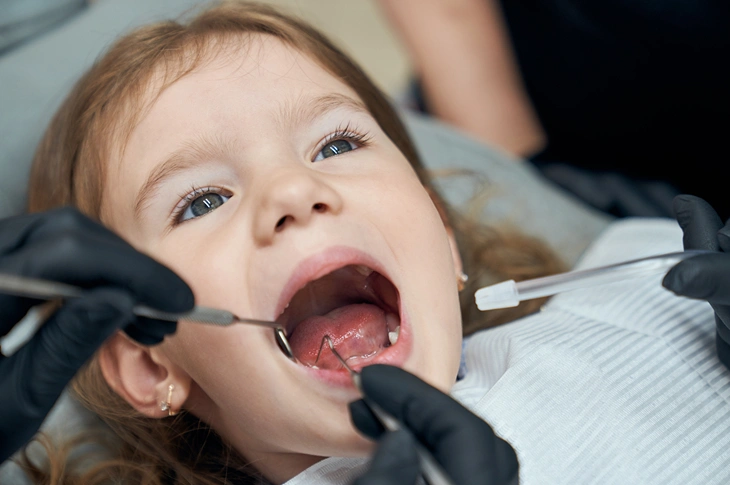
Foto: freepik.com/Freepik
Although daily home care is very important, it alone is not always enough to notice microscopic changes in the enamel or the accumulation of plaque in hard-to-reach places. Regular dental visits ensure overall control of the condition of the oral cavity, allowing the first signs of damage or oral health problems to be noticed in a timely manner. During the visit, the specialist not only evaluates the current situation, but also monitors the development of the child's jaws and bite.
- The first visit to the dentist should be planned already in the first year of life. About why exactly early-started dentist visits are so important and how they promote a positive attitude towards dental health at a later age, we invite you to read the article “When and why should a child begin regular dentist visits?”.
An equally important role in maintaining the child's oral health is played by a professional dental hygienist, who thoroughly cleans plaque and tartar, which is not possible at home with an ordinary brush. After a quality cleaning, the specialist can recommend and carry out additional preventive measures:
- Applying dental sealants: filling the pits of the chewing surfaces with a special material in order to protect them from caries bacteria;
- Fluoridation: strengthening the enamel with high-concentration preparations, making it more resistant to acids;
- Hygiene training: practical advice for parents and the child about the correct cleaning technique and the choice of the most individually suitable aids.
Knowledgeable specialists work at the Adoria Health and Beauty Centre, who know how to find an approach even to the smallest patients, turning the visit into an interesting adventure. In order to reduce a child's fear of the dentist, our specialists have prepared a guide for new parents “10 recommendations on how to make a dentist visit less frightening for a child”, which will help to gently assist the child in overcoming anxiety.
How to encourage a child's interest in oral hygiene?
Creating positive motivation is one of the biggest challenges for parents, but it is the key moment in forming independent habits. Children learn best from example, so cleaning teeth together with parents is a wonderful way to show that it is a self-evident and pleasant process. You can let the child choose a toothbrush with a favourite cartoon character or a paste with a favourite flavour, which will create additional positive emotions.
If the child sees that the parents treat their own dental health responsibly, they too will adopt this as the norm. The main thing is patience and a calm attitude, even if at first resistance arises in the process. A child's dental health begins precisely with the foundations laid by parents and with the attitude towards dental hygiene in home conditions, with knowledge about how to properly care for a child's teeth and with regular children's dentist visits, in order to carry out both preventive examinations and dental hygiene.
Take care of your child's dental health from the very first little teeth!
At the Adoria Health and Beauty Centre, dental specialists will help you learn how to properly care for a child's teeth and will give recommendations on the choice of care products. Our compassionate dentists and hygienists provide an individual approach to each little patient, turning oral health care into a positive experience without anxiety. Book a consultation by calling +371 67 315 000 or by filling out the application on the website, and give your child a healthy smile right away!