
Root canal treatment: tips for post-operative care
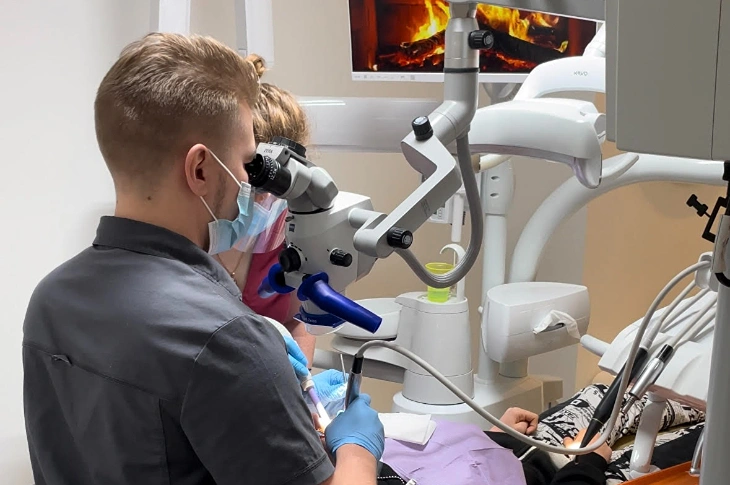
Photo: adoria.lv
Root canal treatment, or endodontics, is often the only way to save a tooth from extraction. Although most of the work is done by the doctor in the office, the recovery process continues at home, and it is precisely the correct care after root canal treatment that is the decisive factor for healing to proceed calmly, without unnecessary pain and complications.
Aleksandra Feoktistova, a dentist at the Adoria Health and Beauty Centre, explains in the continuation of this article what to do and what not to do after root canal cleaning, and which symptoms require heightened attention.
In this article you will learn:
- The first hours after the visit: how to act while the anaesthesia is working, and why it is important to be cautious when eating.
- Pain and medication: what indicates normal post-operative sensitivity, and in which cases additional help is needed.
- Hygiene and the temporary filling: how to clean your teeth correctly so as not to traumatise the treated area or dislodge the temporary material.
What to expect immediately after the procedure and what is the initial care?
Endodontics today is a highly developed branch of dentistry that often makes it possible to preserve the patient's tooth even in cases of complicated infections, eliminating the need to extract it. Although the procedure itself is performed in the doctor's office, the course of the recovery process and the reduction of the risk of complications largely depend precisely on the patient's responsible attitude.
Safe and correct care after root canal treatment means precisely following the specialist's instructions regarding the regimen in the first hours after the procedure.
- Eating restrictions and anaesthesia: while the local anaesthesia is working and the soft tissues of the oral cavity – the lip, cheek or tongue – are numb, eating is strictly forbidden. During chewing there is a high risk of accidentally traumatising or strongly biting the numb tissues, creating wounds that heal slowly and painfully.
- Reducing discomfort: as the anaesthesia wears off, mild pain or aching often appears, which is a natural reaction of the body to the intervention. To reduce discomfort and prevent the formation of inflammation, it is advisable to take the anti-inflammatory and painkilling medications prescribed by the doctor in good time.
- Rest regimen: in the first hours after the procedure it is advisable to avoid intense physical exertion and abrupt movements, which could contribute to an increase in blood pressure and possible bleeding or throbbing pain in the treated area.
It should be taken into account that during the procedure a microscopic intervention is performed in the tooth's deeper tissues, which requires excellent precision. Although high-level dentistry in Riga provides canal treatment under microscope control, maximally sparing the healthy tissues, the body still needs time to fully recover from the manipulation. It is precisely the use of modern technologies in combination with the correct patient regimen that guarantees the fastest recovery.
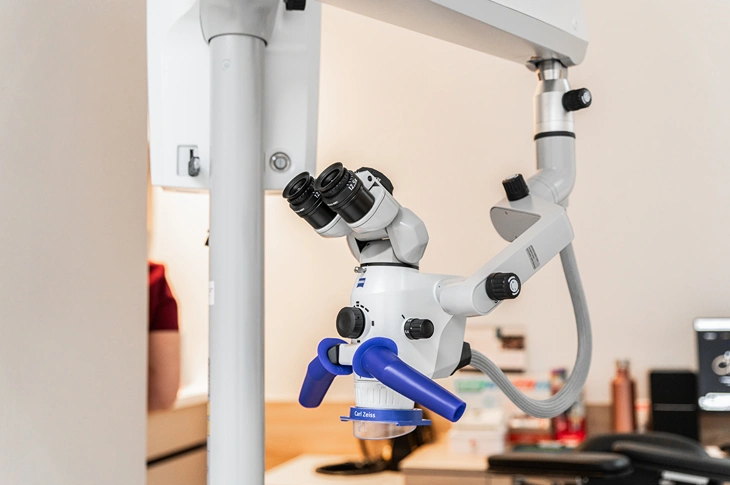
Photo: adoria.lv
Which dietary restrictions should you pay attention to during recovery?
In the first days after root canal cleaning the tooth may be more sensitive than usual, and it is often sealed with a temporary filling that is not as durable as the permanent restoration material. To protect the tooth from fracture and the temporary material from falling out, certain caution must be observed when choosing food.
- Avoid hard products: nuts, hard candies, rusks or hard fruits can create too much pressure on the tooth walls, which after canal cleaning are more fragile. This can lead to a fracture of the tooth, which often means losing the tooth.
- Chew on the opposite side: while the tooth has not been restored with a permanent crown or filling, it is advisable to chew food on the opposite side of the mouth.
- Be careful with sticky foods: chewing gum, toffees and caramels can stick to the temporary filling and pull it out. If the temporary filling falls out, bacteria can enter the canal system, which would mean the need to repeat the treatment.
Are pain and sensitivity after canal cleaning normal?
Many patients wonder whether pain after the procedure means that the treatment was not successful. It is important to understand the difference between normal post-operative sensitivity and complications. Mild, dull pain that responds well to ordinary painkillers (for example, ibuprofen or paracetamol) is acceptable for the first 3–5 days.
The tissues around the tooth root need time to calm down after the inflammation and mechanical treatment. However, there are situations that require an urgent consultation with a specialist.
- The pain becomes unbearable and medications do not reduce it.
- Marked swelling appears in the cheek or gum near the treated tooth (sometimes slight swelling is normal, but it should not increase rapidly).
- Body temperature rises.
- The temporary filling has completely fallen out.
How to properly care for oral hygiene after the procedure?
Fear of touching the treated tooth often makes patients avoid cleaning it, but this is wrong. The accumulation of plaque promotes gum inflammation, which can complicate healing. The oral hygiene and proper tooth care routine after root canal treatment does not need to be drastically changed, but it must be carried out with greater caution.
Teeth should be cleaned twice a day with a soft toothbrush, making gentle, sweeping movements. Special attention should be paid to flossing:
- The floss is inserted between the teeth carefully.
- When cleaning the gap by the treated tooth, the floss must not be pulled sharply upwards, as it may catch the edge of the temporary filling and dislodge it.
- Instead of pulling the floss out vertically, it is better to pull it out horizontally – to the side, through the interdental gap
Why must you not skip the next visit?
Photo: adoria.lv
Root canal treatment often takes place in several stages. After the first visit, medication for disinfection is usually placed in the canals, and the tooth is sealed with a temporary material. This material is intended only to ensure short-term tightness – usually for 1 to 3 weeks.
- Patients often have questions about why root canal treatment is so complex and why it cannot be done in one go. Learn more about the course of endodontics and what happens at each stage of treatment by reading the article “How root canal treatment proceeds: the process step by step”.
By postponing the next visit, the temporary filling begins to crumble over time and loses its tightness. This allows saliva and bacteria to re-enter the cleaned canals, causing a recurrent infection. As a result, the treatment has to be repeated, which also means additional financial expenses. To plan the treatment stages and account for the costs, we invite you to review the information in the “Price list” section of our website, remembering that restoring the tooth with a permanent filling or crown is a mandatory step for the successful completion of treatment.
Entrust your smile to the Adoria specialists!
To preserve dental health in the long term, not only precise treatment is essential, but also responsible care after root canal treatment. If you suspect inflammation of the tooth nerve or need a consultation about treatment that has already begun, the Adoria Health and Beauty Centre offers modern endodontic care using the latest generation of technologies. Our specialists will take care of your comfort and provide detailed recommendations for the recovery period. Book an appointment by calling +371 67 315 000 or by filling in the application form on the website.