
Removing tartar at home – can it replace a dental hygienist?
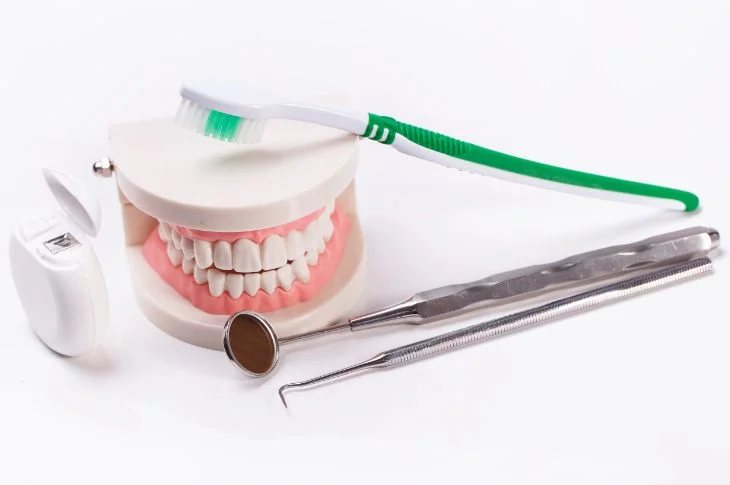
Photo: freepik.com/Freepik
Everyone develops tartar to some extent, and only a few people are completely free of it.
On websites, forums, and in stories, we hear about various home remedies that help get rid of this problem, but is removing tartar at home actually recommended? Or, on the contrary, does it not really help and only harm dental health?
And how should you properly deal with tartar, why does it form, and how to avoid it—find out in this article!
Tartar – what is it and why does it form?
Food and drink residues form a film on the teeth. After about 24 hours, saliva begins to mineralize—or harden—this film.
If not cleaned regularly and thoroughly, this gradually hardening plaque turns into tartar within about 20 days, which builds up on the tooth enamel, between the teeth, and above and below the gums. Tartar builds up most intensely right around the front teeth of the lower jaw, as this is where the salivary ducts are located and where the most saliva is secreted.
Tartar can be identified by examining the teeth—it forms a yellowish, brownish, or black band in the interdental spaces and along the gum line; furthermore, there are two types: supragingival and subgingival tartar. Supragingival tartar is visible and is best seen by examining the inner surfaces of the front teeth; subgingival tartar is not visible, but is indicated by regularly bleeding gums.
Once tartar has formed, it cannot be removed at home.
Who is most likely to develop tartar?
First of all, tartar forms in anyone who does not brush their teeth regularly.
People whose saliva contains high levels of minerals are less likely to develop cavities, but tartar forms much more prominently.
Tartar forms particularly prominently in smokers, who need to have tartar removed by a dental hygienist more frequently. Tartar also forms more rapidly in people with diabetes, as well as in those diagnosed with heart disease, cancer, or other chronic conditions, and in cases of osteoporosis.
Similarly, people with weakened immune systems, older adults whose bone structure naturally changes, and pregnant women should pay special attention to preventing tartar buildup.
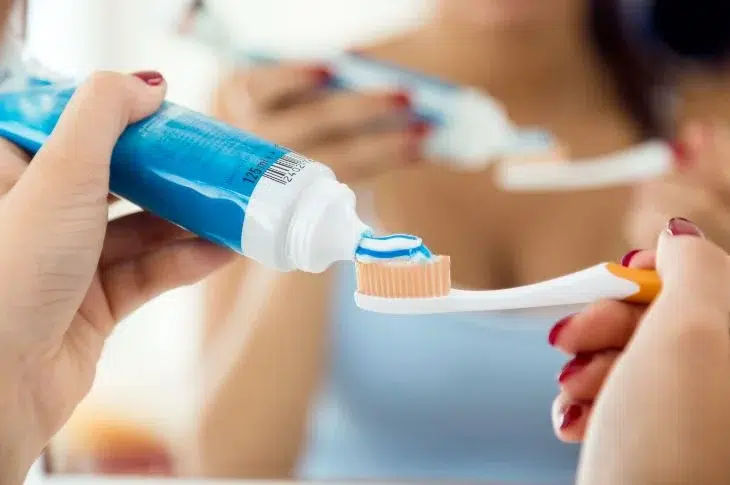
Photo: freepik.com/Freepik
How to get rid of tartar?
- Strict and regular oral hygiene – teeth should be brushed both in the morning and at night, as well as between meals, to remove food debris that forms plaque, which, in turn, causes not only tartar buildup but also cavities.
- Teeth must be brushed properly. Teeth should be brushed for at least 2–3 minutes. Even if you brush your teeth regularly, simply running the toothbrush quickly over the tooth surfaces is not enough to clean all tooth surfaces thoroughly.
- Teeth should be cleaned using both a toothbrush and toothpaste, as well as dental floss. Only dental floss can reach the interdental spaces that a toothbrush cannot access—where tartar forms most quickly.
- Special toothpaste for removing tartar is not available, but you can purchase various specialized toothpastes that help prevent plaque and tartar buildup. Toothpastes containing chlorhexidine or cetylpyridinium chloride, which also reduce gum inflammation, are the ones dentists recommend for daily use.
However, before purchasing specialized dental care products, it is advisable to consult a dental hygienist, dentist, or pharmacist. Such dental care products are not recommended for use by children.
To remove tartar, you should see a dental hygienist.
It is also advisable to do this in a timely manner. If tartar is not removed in time, it causes inflammation in the gums and surrounding tissues. As a result, gingivitis begins to develop and, in more severe cases, periodontitis, which is a serious gum disease that is difficult to treat.
Gum recession begins to occur, and as the supporting tissues deteriorate, the teeth start to loosen and will eventually fall out.
A dental hygienist uses special equipment to safely and effectively remove tartar. However, if there is a large amount of tartar, multiple visits may be necessary to completely remove it.
Using ultrasound, the dental hygienist will remove large masses of tartar, continuing the procedure with hand instruments. The procedure can also be uncomfortable, which is particularly noticeable in patients with significant tartar buildup.
By visiting the hygienist regularly and following proper oral hygiene practices, visits to the dental hygienist will not be painful and will keep your teeth healthy and strong in the long term.
Removing tartar at home
It is not uncommon for people to try to remove tartar on their own at home. Using tools they have purchased themselves, needles, or other sharp objects, they attempt to scrape off the tartar.
However, this should absolutely not be done!
It damages the tooth, causing damage to the tooth surface where tartar will eventually build up more rapidly, and it also damages the gums.
Various natural remedies for removing tartar, for the most part, only harm and damage not only the teeth and gums but the overall health of the oral cavity and its natural microflora.
What you can do to prevent tartar buildup is to regularly eat fiber-rich foods, such as apples, carrots, cabbage, etc., so that the soft plaque is mechanically scrubbed away, as nature intended.

Photo: freepik.com/Freepik
Dental hygiene – twice a year
By visiting your dental hygienist, you can be sure that tartar removal is performed professionally, with high quality, and without harming your teeth.
The dental hygienists at the Adoria Beauty and Health Center recommend visiting a dental hygienist at least once every 6 months, and every 3 months if more serious damage or conditions are detected. Adoria Beauty and Health Center Dentistry – For you and your family!