
Dental Implants or Prosthetics: Which Solution Is Right for You
Photo: freepik.com/Freepik
Timely restoration of lost teeth is critically important in order to fully regain the ability to chew any food without difficulty and to prevent the remaining teeth from shifting or the facial features from changing visually. Modern dentistry offers two main paths for replacing lost teeth, the first of which is implantology. In this method, a titanium dental implant is first screwed into the jawbone, replacing the tooth root, and only afterwards is the prosthetic work carried out on it by fitting an aesthetic crown or bridge.
The alternative is classical prosthetics without surgical intervention, which uses fixed bridges supported by one's own teeth or removable plates. Each of these methods has its own specifics, which affect both the duration of treatment and the stability of the final result in everyday life.
In the continuation of the article, Iveta Krītiņa, a dentist at the Adoria Health and Beauty Centre, explains in which cases dental implants or prosthetics are better suited for restoring the oral cavity, and what the most significant differences between these two approaches are.
In this article you will learn:
- The essence of the methods: what is the fundamental difference between fixed implantation and traditional prosthetics?
- Functional comparison: how does each of the solutions affect the condition of the jawbone and everyday comfort?
- Selection criteria: which factors help determine the most suitable option in an individual situation?
What are the main differences between implants and prostheses?
In order to make the right decision, you first need to understand the technical execution of each method and its impact on the oral cavity. Modern dentistry offers both methods as safe ways of helping to regain lost aesthetics and dental function, yet their fixation principles are completely different.
When assessing whether dental implants or prosthetics are better suited in a particular situation, you should consult a specialist who will evaluate the overall condition of the teeth and oral tissues as well as the density of the bone tissue.
- A dental implant is an artificial root, which is placed directly into the jawbone during a minor surgical operation, so that an aesthetic crown can later be fitted onto it. This titanium implant fuses completely with the living bone tissue, becoming a permanent and stable foundation for the new tooth.
- Classical dental prosthetics, on the other hand, takes place without surgery and involves the fabrication of various crowns, bridges or removable plates in a laboratory, individually for each patient, which are then fixed to the adjacent teeth or directly onto the surface of the gum mucosa.
The fundamental difference lies in load distribution and everyday comfort – prosthetic structures fitted onto an implant provide natural pressure on the jawbone during chewing, which stimulates local blood circulation and protects the bone from gradual shrinkage.
Traditional prostheses, by contrast, do not halt this process of tissue shrinkage, as a result of which the structure may begin to move over time, cause friction in the oral cavity and create the need for regular adjustment or the use of special fixative creams.
How to choose dental prostheses and what are their main advantages?
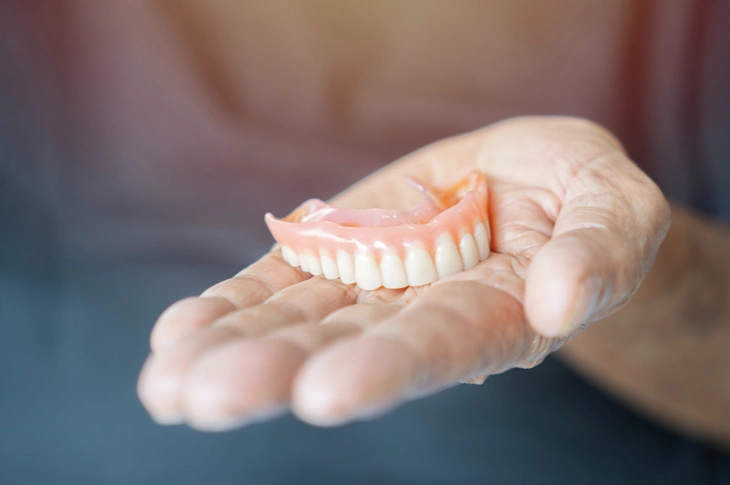
Photo: freepik.com/Freepik
For patients who, due to various medical indications or budgetary considerations, do not choose implantation, classical dental prostheses are an optimal alternative. These are specially laboratory-made structures of artificial teeth, individual crowns or a whole row of teeth, which visually and functionally replace the lost teeth.
These solutions are used to fully regain the ability to chew any food without difficulty, to restore clear speech diction, to prevent the adjacent teeth from tilting into the empty spaces and to preserve natural and beautiful facial aesthetics without surgical intervention. When choosing this path, it is important to study the types of prosthetics available in dentistry, because each system – regardless of whether it is a removable plate or a permanently fixed bridge – is intended for a specific number of lost teeth and a different method of securing it in the oral cavity.
When preparing an individualised care plan, specialists carefully evaluate the situation and explain how to choose dental prostheses according to everyday needs and wishes:
- fabrication of removable prostheses: full or partial plastic plates and more modern arch systems with special retainers, used in cases of a large number of missing teeth or complete tooth loss;
- fitting of dental crowns: fixed, laboratory-made "shells", permanently cemented onto a severely damaged but preserved natural tooth, fully restoring its shape and visual appearance;
- placement of dental bridges: permanently secured structures made of several connected crowns, supported on the adjacent teeth in order to safely fill in one or more lost teeth;
- micro-prosthetics with veneers, inlays and onlays: aesthetic porcelain plates for improving the smile zone, or particularly durable laboratory-cast fillings for the anatomical restoration of large lateral tooth surfaces.
The main advantage of prostheses is the painless and comparatively quick fabrication and fitting, more economical costs and the possibility of doing entirely without surgical operations.
Implants or prostheses: the most significant aspects that influence the choice
Each of these options has its own strengths and weaknesses, which directly affect the patient's quality of life in the years to come. To help you navigate the options and to give an objective insight, the main criteria for comparing the two methods are summarised below.
| Criterion | Dental implants | Dental prostheses |
|---|---|---|
| Stability and comfort | Completely fixed in the jaw, they do not move, do not cause friction and function exactly like natural teeth. | Ordinary removable dental prostheses can be unstable and mobile during speech, not infrequently causing noticeable discomfort and requiring the use of special fixative adhesives. |
| Impact on adjacent teeth | The adjacent teeth are not traumatised or ground down, leaving their enamel intact. | In order to fit permanent bridges, the adjacent teeth must be heavily ground down, while removable systems with clasps can gradually damage the tooth enamel. |
| Bone preservation | The titanium implant fully takes over the function of the natural root and stimulates the jawbone during chewing, preventing its irreversible shrinkage. | It does not provide the necessary load on the jaw, so the bone tissue beneath the structure naturally continues to resorb and shrink over time. |
| Service life | Thanks to biological compatibility with the bone, with proper oral hygiene they last several decades or even a lifetime. | Because of material wear and changes in the shape of the jaw, the structures must be adjusted, relined or completely replaced every 5–7 years. |
| Surgical intervention | A sterile operation performed under local anaesthesia is required to insert the artificial root, followed by a healing period. | It takes place entirely without surgical manipulations; all stages involve only scanning the oral cavity or taking impressions and fitting. |
| Recovery and adaptation | The post-operative wound heals within a few days, but complete integration of the implant into the bone takes 3–6 months. Only after the implant has integrated can the permanent crowns be fitted. | There is no surgical recovery, but the adaptation time to the new structure can last from a few weeks to a month, learning to speak clearly and eat anew. |
| Initial costs | Requires a larger initial financial investment, because the price includes high-quality materials, sterile equipment and the surgeon's work. | A financially more accessible solution with lower initial costs, allowing the aesthetics of the row of teeth to be restored quickly and economically. |
Evaluating the factors mentioned in the table, it can be seen that dental implants provide unrivalled comfort and fully restore both the natural functions of the tooth and its aesthetics. This solution functions fully like one's own teeth, completely restoring maximum chewing force and preventing the sagging of facial features that naturally occurs after a loss of bone volume.
Although this method requires a larger initial investment and patience during the integration period, it is a long-term investment in health, which eliminates the need for regular replacement of prostheses in the future. For patients who are considering dental implantology but feel concern about the course of the procedure itself, valuable information and peace of mind will be provided by the article "Are Dental Implants Painful? What to Expect After Surgery?".
Why is dental prosthetics on implants chosen more and more often nowadays?
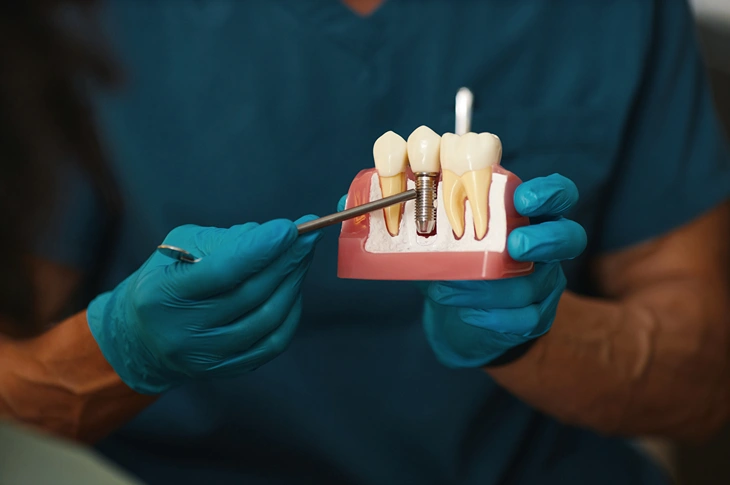
Photo: freepik.com/Freepik
Innovative technologies make it possible to combine the best qualities of both restoration methods, creating highly technological combined solutions even in cases of complete tooth loss. Such modern dental prosthetics on implants provides the possibility of fitting the most diverse types of structures onto artificial roots, ranging from fully fixed, multi-part zirconia or metal-ceramic bridges to milled arch solutions of the highest durability.
A few titanium implants are placed strategically in the jawbone, serving as a stable foundation for these systems and completely replacing the need for massive structures that burden the oral cavity. This approach offers enormous advantages, because the patient gains complete confidence that any chosen system – whether it is a permanently screwed-in bridge or a removable click-on prosthesis supported by special fixation attachments – will not move during eating or conversation.
Since the entire chewing load is transferred onto the artificial roots integrated into the bone, the soft tissues and gums are not traumatised or chafed. It is an outstanding innovation that ensures maximum comfort, because modern upper-jaw systems no longer require massive palatal coverage, fully preserving the natural perception of taste and temperature.
Why is the timely replacement of missing teeth the foundation of a successful result?
Postponing a visit to a specialist after losing a tooth is not advisable, because changes in the oral cavity begin within the very first months. Timely and professional replacement of missing teeth protects the adjacent teeth from shifting and moving in the direction of the gap, which can irreversibly damage the bite. When the jawbone lacks chewing load for a long time in the exact place of the lost tooth, the body begins to resorb bone tissue in this particular zone, gradually reducing the volume and thickness of the jawbone.
If the bone has shrunk too much, the placement of a dental implant is no longer possible without a prior bone grafting operation, and in such situations the overall dental implant prices also increase significantly. To avoid such complicated additional procedures, diagnostics and treatment planning must be started in good time. Every month spent without a tooth complicates the further course of restoration, regardless of the method chosen.
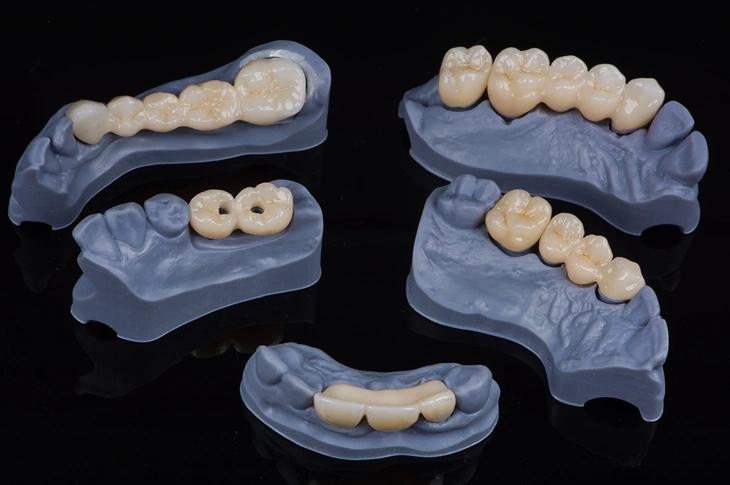
Photo: freepik.com/Freepik
3D X-ray: the first step towards making the right decision
Regardless of the patient's personal wishes, the final decision on the most suitable method of tooth restoration can only be made after a comprehensive examination of the oral cavity. In order to determine which solution – dental implants or prosthetics – is the most suitable, the first step nowadays is always 3D X-ray diagnostics, provided by a modern dental diagnostics room. Such an examination allows the specialist to see the precise bone structure, the location of the nerves and the condition of the sinuses with millimetre accuracy.
Based on the data obtained, the dental surgeon can determine precisely whether the jaw is ready for implantation, or whether classical dental prosthetics will nevertheless be the safer choice. Modern technologies provide the possibility of predicting and virtually modelling every stage of treatment, guaranteeing that the chosen solution will be maximally effective and sustainable. All that remains for the patient is to trust the knowledge and experience of the professionals, so that together you arrive at the best result.
Entrust the care of your smile's aesthetics to the professionals at Adoria!
Restoring lost teeth with modern methods is the best investment in health, one that fully returns self-confidence and joy of life. At the Adoria Health and Beauty Centre, all the necessary diagnostic and restoration services are available, ensuring the highest level of care and outstanding technical execution for every patient. Book an individual consultation with our highly qualified specialists by calling +371 67 315 000 or by filling in the application form on the website, and let us take care of the beauty and stability of your smile!