
Skin Allergies in Adults: What Causes How Treated?
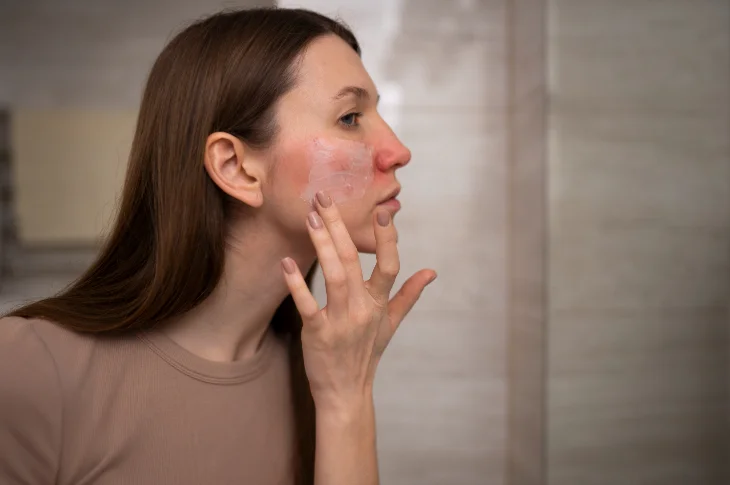
Photo: freepik.com/Freepik
Skin human's largest organ serving as primary barrier against environment but sometimes can overreact to seemingly harmless substances causing allergic reactions. Skin allergies in adult age can appear suddenly causing discomfort significantly affecting daily life. To successfully control this condition important understand its causes trust experienced specialist's recommendations. More about most common skin allergy types their treatment options tells Health and Beauty Center Adoria dermatologist Jevgēnija Vladimirova.
In this Article You'll Learn:
- What most common allergens reaction types adults face;
- What diagnostic methods used for allergy cause determination;
- What modern therapy options for symptom reduction prevention.
Most Common Skin Allergy Types Their Causes
In adult age skin allergies can manifest very differently from local redness to sudden rashes all over body. Each reaction basis specific immune system response mechanism to some irritant allergen from environment.
Contact Dermatitis
One of most common allergy types arising when skin comes into direct contact with allergen irritating substance. Allergic contact dermatitis develops immune system reacting to specific substance symptoms usually appear only at contact site e.g., around neck from jewelry hands from cream.
Typical allergens nickel (found in jewelry belt buckles) fragrances preservatives in cosmetics latex also dyes chemicals used in certain fabric processing e.g., formaldehyde resins prevent wrinkling. Also certain medications applied to skin can cause reaction. Reaction manifests as redness pronounced itch swelling sometimes small fluid-filled blisters.
Atopic Dermatitis (Neurodermatitis)
This chronic skin condition characterized by inflamed itchy dry skin patches. Though atopic dermatitis more often starts in childhood can persist first appear only in adult age. In this case skin's natural protective barrier disrupted making particularly susceptible to environmental allergens irritants e.g., dust mites pollen pet dander certain food products.
Hives (Urticaria)
Hives urticaria sudden skin reaction characterized by very itchy red pale slightly raised rash formation visually resembling "nettle stings". These rashes have characteristic migratory nature: rashes usually completely disappear within 24 hours without leaving traces but new ones can rapidly form in other body areas. Acute hives causes very diverse can include both allergic reactions to food products e.g., nuts seafood certain medications insect bites non-allergic reactions to physical factors like cold heat sunlight prolonged pressure on skin.
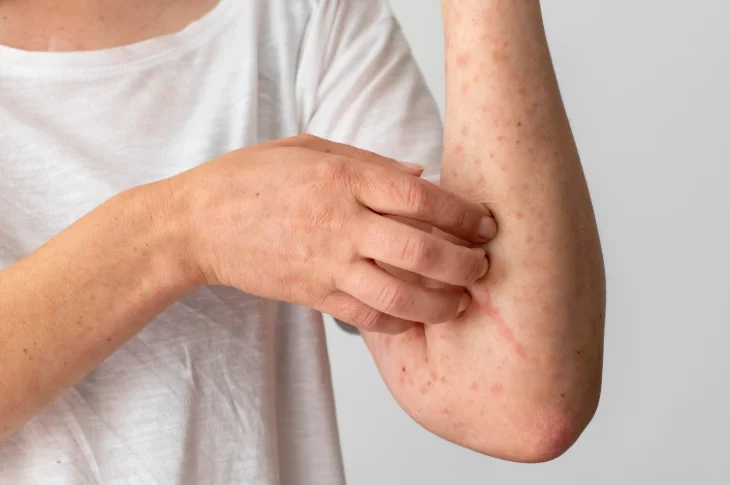
Photo: freepik.com/Freepik
Angioedema Swelling
Angioedema closely related to hives condition often developing simultaneously but differs by affecting deeper skin mucous membrane layers – subcutis. Manifests as sudden rapid localized swelling most often observed around eyes lips palms feet tongue. Its causes can be identical to hives triggers – allergic reactions to food medications insect bites but angioedema specifically can be provoked also by certain blood pressure medications e.g., ACE inhibitors.
Unlike hives' superficial rashes angioedema more often accompanied by pain heat pressure sensation not pronounced itch. This condition particularly dangerous if swelling affects tongue airways causing difficult breathing such cases needed emergency medical help.
How Dermatologist Determines Precise Diagnosis?
Precise allergy cause determination cornerstone for effective treatment therefore avoid self-treatment potentially masking symptoms even worsening skin condition. All diagnostics process starts with dermatologist consultation during which dermatologist not only visually assesses skin condition but also collects detailed anamnesis.
In conversation with patient clarified essential questions about symptom appearance lifestyle used cosmetics medications dietary habits already initially helping narrow potential allergen circle. Based on obtained information specialist can order specific additional examinations tests.
- Skin patch tests: this method "gold standard" for allergic contact dermatitis diagnostics. During on back skin for 48 hours applied special patches with standardized most common allergens (metals preservatives fragrances etc.). After patch removal doctor assesses skin reaction allowing identify one several substances causing allergy.
- Skin prick tests: this test used to diagnose immediate type allergic reactions characteristic of hives atopic dermatitis exacerbations. During test on forearm skin dropped drops with various allergen extracts e.g., dust mites pollen food products minimal prick made through to skin's surface. Positive reaction (redness small swelling) appears within 15–20 minutes.
- Total IgE level determination: blood test helping determine all immunoglobulin E (IgE) antibodies total amount in blood. Elevated indicator can indicate general allergic tendency but doesn't point to specific cause serves only as general indicator.
- Specific IgE antibodies determination: this much more precise informative analysis allowing confirm suspicions about specific "culprit". If after conversation with doctor skin tests suspicion e.g., of birch pollen milk protein allergy this analysis specifically checks whether immune system produces antibodies exactly against this particular allergen. Though high specific antibodies level significant evidence not always final verdict. Sometimes body can produce antibodies against substance not causing real symptoms in daily life. Therefore dermatologist always evaluates test results in context with patient's complaints clinical picture distinguish true allergy from so-called latent sensitization.
- Differential diagnostics dermatoscopy: not every red itchy rash on skin automatically means allergy. Many other skin diseases e.g., psoriasis fungal infections rosacea initially can look very similar. Therefore important diagnostics part differential diagnostics – process where doctor systematically evaluates rules out other possible diseases confirm correct diagnosis. In this process very useful dermatoscopy – non-invasive method allowing enlarged view skin structures helping quickly distinguish subtle nuances between various dermatoses.
However crucial remember skin allergies roots most often sought exactly in childhood. First signs not timely noticed properly cared can promote more serious problems in adult age.
Therefore if family predisposition to allergies child appears unusual skin dryness rashes children's dermatologist visit best investment in skin health long-term. Early diagnostics timely treatment initiation main prerequisite reduce allergy manifestations in future.
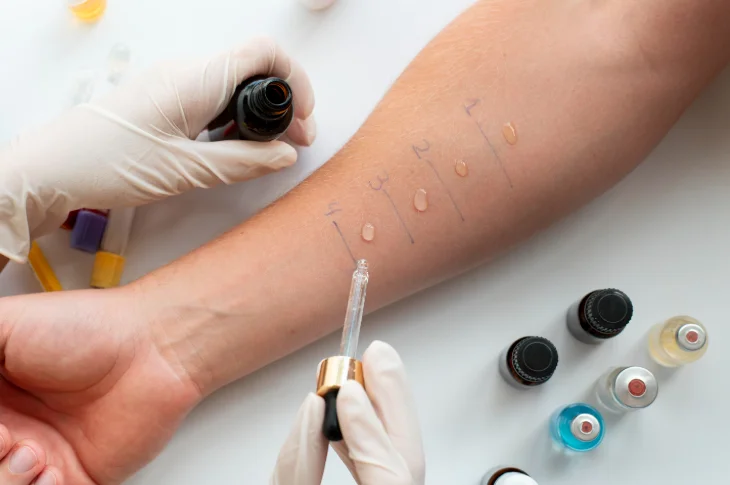
Photo: freepik.com/Freepik
Modern Skin Allergy Treatment Prevention Methods
After precise diagnosis determination developed individual multi-stage treatment prevention plan. Modern approach no longer focuses only on symptom suppression – its goal act on inflammation processes at cellular level interrupt disease development significantly improve quality of life long-term.
Therapy Basic Principles
These two cornerstones invariably important in any therapy basis today paid special attention.
- Allergen identification exclusion: precise "culprit" finding conscious exclusion still most effective method prevent disease flare-ups.
- Skin barrier restoration: this therapy stage particularly critical in atopic dermatitis case. Regular therapeutic moisturizing creams (emollients) use containing such substances as ceramides urea hyaluronic acid helps restore skin's natural protective layer reduce its permeability to allergens irritants.
Topical Therapy: From Standard to Innovations
Externally used products still first choice for mild moderate allergies. Prescription corticosteroid ointments still effective tool for quick reduction of acute inflammation itch flare-ups.
Meanwhile for long-term use application to sensitive areas e.g., face neck skin folds increasingly recommended modern prescription medications e.g., topical calcineurin inhibitors (TCI) PDE4 inhibitors. These products effectively reduce inflammation itch without causing steroid-associated side effects.
Standard Systemic Therapy in Severe Cases
If local therapy insufficiently effective disease course severe considered transition to systemic treatment whose options in modern dermatology significantly developed offering increasingly targeted innovative solutions.
- Antihistamines: modern second-generation antihistamines effectively reduce itch hives symptoms without causing drowsiness.
- Phototherapy: treatment with controlled ultraviolet (UV) rays still relevant method for severe eczema cases as suppresses immune system's excessive activity in skin.
Most Innovative Solutions for Severe Allergy Control
Cases when even standard systemic therapy doesn't provide results modern dermatology offers targeted innovative solutions acting on disease cause at cellular level.
- Biological therapy: targeted therapy with protein medications (antibodies) administered by injection very precisely blocking specific external inflammation signals in body. This method particularly effective for moderate severe atopic dermatitis chronic hives treatment providing long-lasting persistent disease control. But need consider this therapy prescribed only if standard treatment methods not sufficiently effective. Due to its high cost specific application decision about therapy initiation state compensation receipt usually made by doctors' council carefully evaluating each patient's medical history disease severity.
- JAK inhibitors: latest generation small molecule medications in tablet form acting on inflammation signal pathways inside cells. Their main advantage very fast action ability effectively reduce even very severe atopic dermatitis symptoms not responding to other treatment methods. But similar to biological therapy also JAK inhibitors expensive prescribed only in severe cases. Moreover as these medications affect immune system processes more broadly before therapy initiation during needed careful patient health monitoring including regular blood tests timely notice control possible risks. Patients with certain comorbidities infections this therapy may not be suitable.
Professional Help for Skin Health at Adoria Health Center

Photo: adoria.lv
Health and Beauty Center Adoria offers highly qualified specialist help for skin health issues. Our experienced dermatologists ensure precise diagnostics using modern methods develop individual treatment plan for each patient. Book consultation!