
Back pain and sciatica: How to tell whether a nerve is damaged?
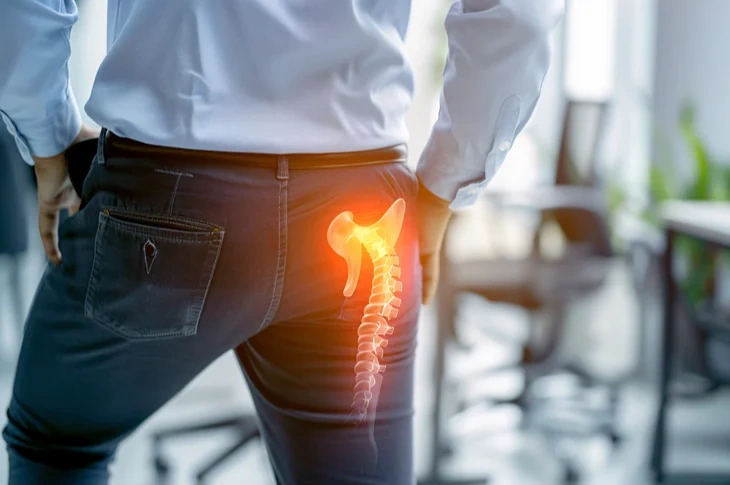
Photo: freepik.com/Freepik
Sharp, sudden or pulling back pain in the lumbar and sacral region is one of the most common problems that significantly restricts freedom of movement in everyday life and worsens general well-being. Very often such discomfort is caused by muscle overload or a ligament strain, but in situations where a burning sensation or a complete loss of skin sensitivity (numbness) appears at the same time in some area of the leg, the main reason may be compression or irritation of the nerve roots running from the spine.
Pronounced and persistent sciatica, or compression of the sciatic nerve, requires immediate attention and precise investigation in order to prevent serious nerve damage in time and to choose the most suitable course of treatment. How to recognise the dangerous signs and which methods can help regain the joy of movement and quality of life is described in the rest of the article by Elīna Polunosika, neurologist at the Health and Beauty Centre Adoria.
In this article you will learn:
- The specifics of the symptoms: how to distinguish ordinary muscle pain from serious sciatic nerve irritation?
- The most common causes: which changes in the spinal structures most often provoke the unpleasant radiating pain?
- Treatment methods: how can targeted rehabilitation, massage and specialist help restore freedom of movement?
Why does pronounced sciatic nerve irritation occur?
The sciatic nerve is the largest and longest nerve trunk in the human body; it begins in the lumbosacral region and runs through the buttock down the back of the entire leg all the way to the toes. If mechanical pressure develops in the lower part of the spine on one of the roots of this nerve, the normal transmission of impulses is disturbed, resulting in severe inflammation of the sciatic nerve, or neuralgia. Such a condition never arises on its own and always signals anatomical changes in the spinal structures that need to be diagnosed in time.
In clinical practice, the main symptom indicating nerve problems is a condition in which back pain radiates into the leg, reaching the thigh, the calf or even the foot. This pain may be accompanied by constant tingling, a pins-and-needles sensation and local loss of skin sensitivity, which intensifies with any slight movement, coughing or change of position. In more severe cases a person begins to feel pronounced muscle weakness in the foot, which disturbs normal gait and makes even the simplest everyday steps difficult.
In order to better understand whether the discomfort is caused by muscle tension or nerve damage, it is essential to assess the main differences:
- muscle overload: the pain is usually local, does not radiate downwards, feels dull and aching, and gradually subsides at rest within a few days;
- compression of the nerve roots: the pain is sharp, burning or similar to an electric shock, it travels along the entire back of the leg and often occurs together with tingling;
- urgent neurological symptoms: complete loss of sensation in the leg, inability to lift the foot or sudden disturbances in the function of the pelvic organs require immediate medical attention.
Timely and professional assessment of these symptoms helps to determine the origin of the problem precisely and to start the correct treatment, preventing the development of a chronic pain syndrome. A more detailed explanation of what to do if disturbances in other parts of the body appear in addition to back problems can be found by reading the article prepared by our specialists "Why do the hands and feet tingle? Dangerous symptoms that must not be ignored".
Which spinal problems most often cause compression of the sciatic nerve?
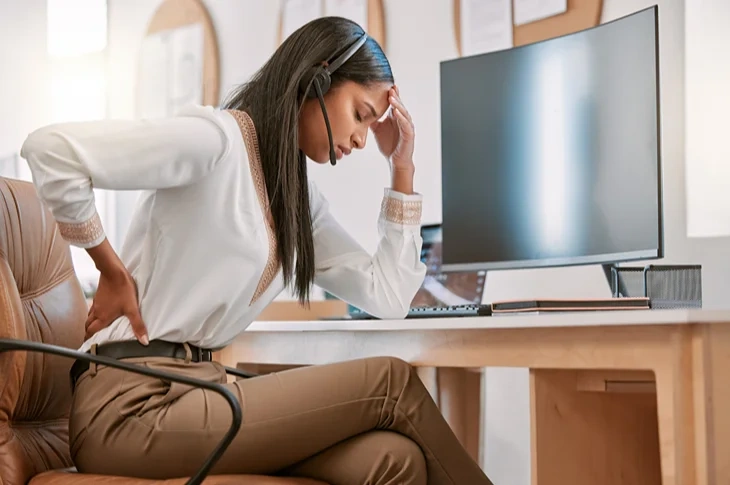
Photo: freepik.com/Freepik
The most common mechanical irritant of the sciatic nerve roots is damage and wear of the intervertebral discs in the lumbar region. If the elastic outer ring of the disc cracks over time or under sudden overload, its soft inner content is pressed outwards, physically compressing the adjacent nerve fibres. As a result of this damage, severe swelling of the surrounding tissues and circulatory disturbances develop, which is why the classic and well-known symptoms of a disc herniation appear – acute, shooting pain in the lower back and leg, pronounced local muscle tension, as well as weakening of reflexes and skin sensitivity.
Since the spine contains several different structures, the unpleasant tingling and pain in the leg can be caused not only by a disc herniation but also by other chronic skeletal changes. To get a better idea of exactly which spinal damage most often provokes pain and when sciatica poses the greatest risks to everyday movement, it is worth comparing the main medical factors:
| Spinal problem | Why does the nerve compression develop? | Most characteristic manifestations in everyday life |
|---|---|---|
| Intervertebral disc herniation (protrusion between the vertebrae) | The protruding disc nucleus physically compresses and irritates the nerve root. | Sharp, sudden pain in the buttock and leg that intensifies markedly under load. |
| Spinal canal stenosis (narrowing of the main canal) | Gradual narrowing of the canal due to natural bone growths. | A feeling of heaviness, weakness and tingling in both legs that intensifies while walking. |
| Spondylolisthesis (slipping of one vertebra) | One vertebra slips forward, stretching and injuring the nerve. | Constant, deep and aching pain in the lower back that radiates to the hips. |
Since each of these spinal pathologies has a completely different course of development, distinguishing them precisely is the main precondition for successful treatment. Today the safest and most informative examination method is magnetic resonance imaging, which allows the doctor to see the soft tissues with millimetre precision and to determine exactly which structure is to blame for blocking the nerve impulses. Detecting these changes in time makes it possible to start targeted conservative therapy early, protecting the person from irreversible weakness of the leg muscles.
What role do targeted physiotherapy and massage play in the recovery process?
To relieve acute back pain and unload the nerve root, gentle drug therapy is used initially, but physical rehabilitation plays the main role in long-term well-being and the restoration of movement functions. As soon as the acute period of inflammation has subsided, specialised procedures and exercises are included in the recovery plan:
- improving tissue blood circulation: to release the tense muscles of the lower back, sacrum and hips, a professional back massage is prescribed as an effective method; it helps to reduce the mechanical pressure on the nerve structures, improves local microcirculation and considerably accelerates the absorption of swelling in the damaged area;
- general well-being prevention: to calm the nervous system and balance general muscle tone, the classic full body massage is an excellent preventive aid, as it improves lymph flow, reduces chronic stress and helps the body recover more successfully after overload;
strengthening the deep musculature: to ensure long-term stability of the spine and prevent repeated compression, an indispensable component is individually designed therapeutic exercise under the supervision of a physiotherapist, which helps to strengthen the core muscles and improve posture.
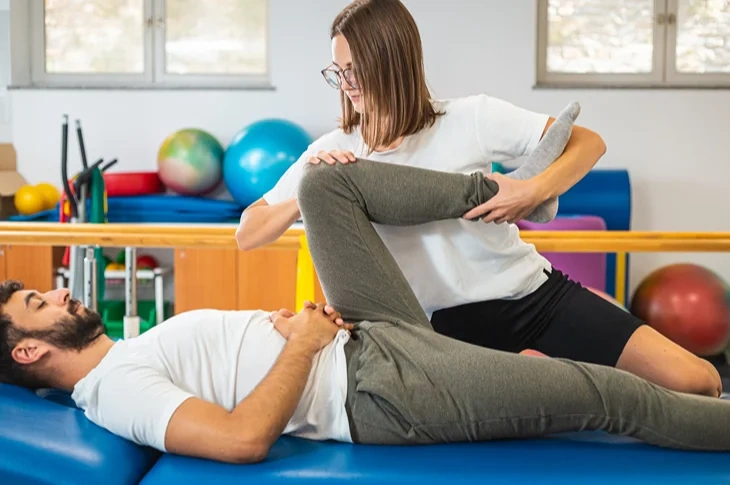
Photo: freepik.com/Freepik
In cases where conservative therapy and rehabilitation do not bring the expected result over several weeks, or if diagnostics reveal critical compression of the nerve fibres, help is provided by a certified neurosurgeon. This specialist precisely assesses the need for surgery in order to remove the disc protrusion surgically and completely free the injured nerve from further deterioration.
In order to fully understand at which stage exercise is sufficient and when surgery should be considered, valuable additional information is provided by the material "Neurologist or neurosurgeon: Which specialist should you turn to?", which explains in detail the competences of both doctors and their cooperation in choosing the right treatment path.
Which everyday preventive steps help to reduce back pain on your own?
Correct daily habits and timely prevention play a huge role in maintaining spinal health and preventing sciatic nerve irritation. To independently reduce acute discomfort and unload the tense structures of the lower back, several simple and safe techniques can be used successfully at home:
- taking a gentle position: at the moment of an acute pain flare-up it is recommended to lie down on your back on a firm surface, placing a rolled-up towel or a pillow under the knees, because such a posture naturally evens out the curve of the spine and immediately reduces the mechanical pressure on the nerve roots;
- modern ergonomics in the work environment: during prolonged sitting it is important to take short stretching breaks every hour, as well as to adjust the height of the chair so that the hips are slightly higher than the knees, thus distributing the load evenly and protecting the intervertebral discs from excessive pressure;
- correct lifting of heavy objects: lifting any object from the ground must be done not by bending at the lower back, but by naturally bending the knees and keeping the back straight, which allows the main physical weight to be transferred to the large muscles of the legs and hips.
In addition to these steps, moderate, regular walks on a level surface are an excellent everyday help in reducing chronic tension and stimulating general blood circulation, as they provide natural movement of the spine and promote the supply of oxygen to the surrounding tissues.
However, it is important to remember that all home techniques and preventive measures serve only as aids for improving well-being. If the pain becomes persistent, progresses or begins to restrict the normal freedom of movement of the leg, self-treatment must be stopped immediately and help must be sought from a neurologist.
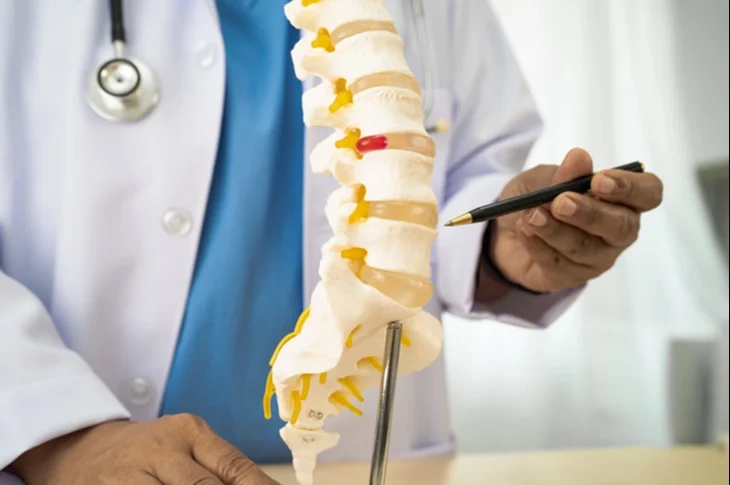
Photo: freepik.com/Freepik
Certified neurologist in Riga – reliable support in restoring spinal health
Freedom of movement, a steady gait and everyday life without constant back pain are the basis of every person's full quality of life and working capacity. The neurologist in Riga at the Health and Beauty Centre Adoria offers comprehensive neurological diagnostic and spinal treatment services, providing the support of highly qualified professionals, modern equipment and individually adapted rehabilitation programmes for every client.
Sign up for an in-person consultation with our specialists by calling +371 67 315 000 or by conveniently filling in the electronic application form on the website, and let us professionally take care of your health and freedom of movement!