
Neurologist or neurosurgeon: Which specialist should you turn to?
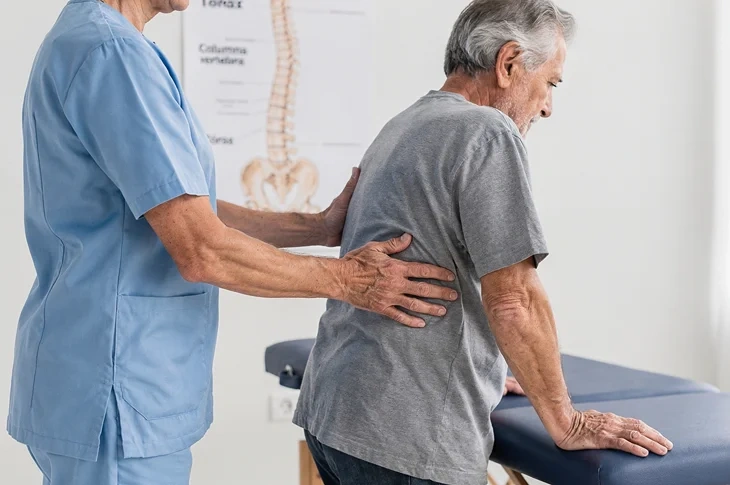
Photo: freepik.com/Freepik
Chronic discomfort during movement, tingling in the fingers or limbs and persistent back pain are common symptoms that indicate functional disorders of the peripheral nervous system. Choosing the right treatment path is often difficult, because patients do not know which medical field expert's help is needed in their particular situation. Bringing clarity and deciding which specialist to visit – a neurologist or a neurosurgeon – makes it possible to start targeted therapy in time. How exactly the competences of these two specialists differ is described in the rest of the article by Elīna Polunosika, neurologist at the Health and Beauty Centre Adoria.
In this article you will learn:
- The division of competences: how do conservative methods differ from operative neurosurgical intervention?
- The importance of diagnostics: why are modern examinations the main precondition for making the correct diagnosis?
- The choice of therapy: in which cases is a patient referred in good time for a consultation with a neurosurgeon?
Neurologist or neurosurgeon: what are the main fields of activity of both specialists?
In the treatment of spinal diseases and nerve damage both these specialists work as one team, but each of them applies a completely different approach to eliminating pain. In the initial stage, when a person is tormented by chronic and increasing back pain, the first provider of help is almost always the neurologist. This specialist focuses on conservative treatment methods (no surgical intervention takes place), performing during the in-person visit an in-depth examination of reflexes, skin sensitivity and muscle strength in order to determine precisely which nerve has been affected.
By contrast, in cases where medication and physiotherapy can no longer help or the changes in the vertebrae are so extensive that they physically injure the nerve fibres, the neurosurgeon becomes involved in the treatment. Their main task is to perform surgery in order to physically free the compressed nerve and save it from irreversible deterioration. In order to clearly understand the patient's real path and when conservative treatment is effective but when surgery should be considered, it is worth looking at the basic competences of both doctors.
- The neurologist's daily work: finds the culprit nerve with special tests, prescribes medication against inflammation and pain, performs therapeutic blockades or injections to reduce swelling, and also refers the patient to massage and therapeutic exercise;
- The neurosurgeon's daily work: carefully evaluates magnetic resonance images and performs operations to remove fragments of a slipped intervertebral disc or to widen the bone canals in which the nerve has become compressed;
- The doctors' shared model of cooperation: the neurologist leads the entire course of conservative recovery, but if weakness appears in the muscles of the patient's legs or arms, or medication does not help over a long period, they immediately refer the patient to a neurosurgeon.
Why does precise diagnostics determine the success of treatment?

Photo: freepik.com/Freepik
Since disorders of the central and peripheral nervous system can manifest with very similar symptoms, specialists use a broad range of visual, functional and laboratory examinations in order to determine the true causes of poor well-being without error. Only the data and measurements obtained make it possible to conclude with certainty whether conservative methods will be enough to restore the patient's health, or whether immediate surgery is nevertheless necessary.
In order to obtain a complete and objective picture of the changes in the body, during the in-person visit and in the further course of examination the neurologist or neurosurgeon may prescribe and perform the following diagnostic methods:
- a comprehensive neuromuscular examination: in the office the doctor manually checks the deep tendon reflexes, changes in skin sensitivity zones, muscle strength and nerve trunk stretching tests in order to determine the initial level of damage;
- magnetic resonance imaging (MRI): provides soft tissue images of the highest precision, allowing a detailed view of the intervertebral discs, the spinal cord, the paths of the nerve roots and brain structures;
- computed tomography (CT): is used in cases where it is necessary to evaluate quickly and in detail the changes, fractures or natural wear in the bone structures of the spine or skull;
- radiography (X-ray): serves as the basic visual examination for assessing the general condition of the spine, displacements of the vertebrae, posture and biomechanical changes during movement;
- neurography and electromyography (EMG): a functional examination in which electrical impulses are used to measure the speed of signal conduction with mathematical precision and to determine whether and how severely the peripheral nerves are damaged;
- modern vascular Doppler ultrasonography: an ultrasound examination that makes it possible to assess the speed of blood flow and the condition of the blood vessels in the head and neck region, ruling out neurological circulatory disorders;
- targeted laboratory tests: the evaluation of blood tests helps to identify hidden chronic inflammation markers, autoimmune processes, vitamin deficiencies or metabolic disorders that can damage the nerve fibres.
In industry practice, precise diagnostics is also important in order to completely rule out other hidden processes in adjacent areas that can sustain or intensify neuralgia throughout the body. For example, irritation of the nerves in the face and jaw region can be caused by chronic processes in the tooth roots, and therefore, if necessary, the clinic's dental diagnostics provides assistance for making a complete diagnosis. A modern three-dimensional (3D) X-ray and a detailed examination of the oral cavity allow the doctor to see precisely even the smallest tissue damage, helping the neurologist to distinguish without error the true causes of jaw nerve pain from other general neurological ailments.
- Since general neurological diagnostics helps to distinguish different symptoms precisely, it is worth separately examining exactly those cases in which poor well-being is caused by direct mechanical irritation of the spinal nerve roots. A broader insight into how such disorders can affect everyday movement and how to recognise the first signals when the discomfort begins to spread throughout the body is provided by the article prepared by the specialists "Back pain and sciatica: How to tell whether a nerve is damaged?".
In which cases are the help of a neurosurgeon and surgery the only solution?
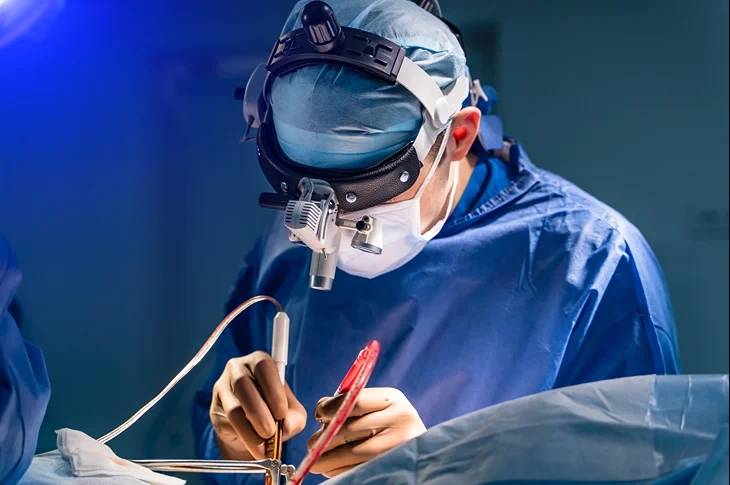
Photo: freepik.com/Freepik
The decision on a neurosurgical operation is never made on the basis of just one diagnosis, because in the peripheral and central nervous system there is a broad set of diseases and acute symptoms that may require immediate surgical intervention.
Most often such a situation develops when, due to various mechanical obstacles, the nerve tissues or the brain are subjected to critical pressure that cannot be eliminated with medication or physiotherapy. In order to give a comprehensive and clear understanding of the cases in which supervision by a neurologist is sufficient and when the neurosurgeon is the only specialist who can save nerve function, it is worth evaluating the different clinical conditions.
| The patient's symptoms and the affected area | The diagnosed problem | Why is a neurosurgeon needed? |
|---|---|---|
| Progressive weakness of the fingers, persistent tingling at night and wasting of the hand muscles. | Severe carpal or ulnar tunnel syndrome (entrapment of the nerves of the arm). | Performs microsurgical widening of the canal in order to completely free the nerve of the arm and restore hand function. |
| Acute pain in the lower back or neck, sudden weakness of the foot (inability to lift the foot upwards and to step normally) or inability to move the arm. | A massive intervertebral disc herniation with critical compression of the nerve roots. | Performs urgent removal of the disc fragment in order to protect the limb from irreversible paralysis. |
| Intense headaches, progressive disturbances of vision, hearing or gait and losses of consciousness. | Benign or malignant tumours of the brain or spinal cord. | Performs precise excision of the tissue formation in order to reduce the pressure on the brain centres and save life. |
| Sudden, very pronounced weakness on one side of the body, confusion or risks of an aneurysm rupture. | Vascular pathologies (aneurysms, malformations) or severe head injuries. | Performs clipping of the blood vessels or removal of haemorrhages in order to prevent a stroke and severe brain damage. |
It is important to be aware that modern treatment of a disc herniation or the elimination of tunnel syndromes mostly begins as a conservative process, and only a small proportion of patients need immediate operative help. During the in-person visit the neurosurgeon carefully analyses the data of magnetic resonance imaging and other examinations in order to make the most gentle, safe and well-founded decision, which will help the patient regain working capacity and a full quality of life without constant discomfort.
Why does choosing an in-person specialist in particular ensure a safe result?
Restoring the health of the spine and peripheral nerve structures is unthinkable without an individual and very precise approach to each patient. Only during an in-person visit are medical specialists able to perform the necessary neuromuscular tests and reliably distinguish muscle problems from severe structural damage.
In cases of complex chronic symptoms, when highly qualified general health care and a multidisciplinary approach are needed, the timely availability of both these specialists and their close cooperation help to create the most effective treatment plan. In situations of persistent and disruptive back problems, a decision evaluated in person on whether the patient's main support is a neurologist or a neurosurgeon guarantees that the chosen treatment method will be completely safe and suited to each person's physical condition.
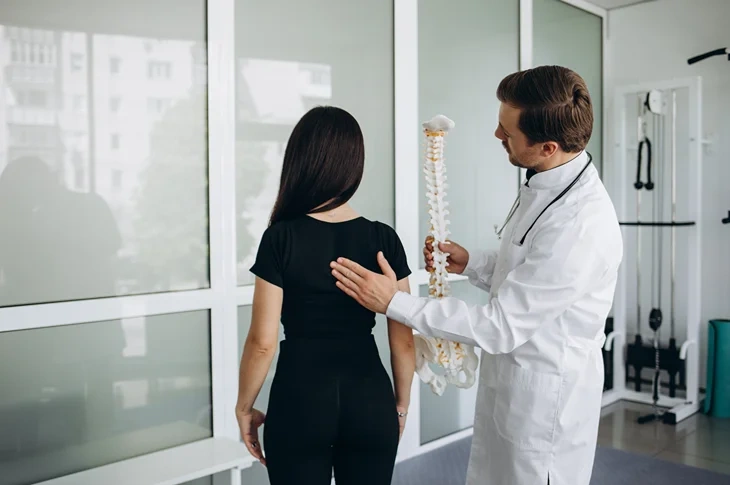
Photo: freepik.com/Freepik
- One of the most common manifestations that clearly indicates neurological problems within the competence of both these specialists is regular tingling of the hands and feet. To gain a clear insight into the true causes of this symptom, the dangerous signs and how treatment started in time helps to regain well-being, valuable information is provided by the article "Why do the hands and feet tingle? Dangerous symptoms and causes".
Entrust the care of your health to knowledgeable industry specialists at Adoria
Freedom of movement, physical well-being and everyday life without constant discomfort are the basis of every person's full quality of life, and therefore a professional, timely and in-person neurologist consultation in Riga or the involvement of a neurosurgeon is the most important step on the way to a precise diagnosis and successful recovery. At the Health and Beauty Centre Adoria, high-level general medical treatment and multidisciplinary services are available, providing the support of a team of experienced doctors, a modern approach and individually adapted rehabilitation programmes for every client. Sign up for an in-person visit with our highly qualified specialists by calling +371 67 315 000 or by conveniently filling in the electronic application form on the website, and let us professionally take care of your health and your joy of life!