
Why do your hands and feet go numb? Dangerous symptoms that must not be ignored

Photo: freepik.com/Freepik
An unpleasant sensation of pricking, burning or numbness in the hands and feet tends to develop relatively often in everyday life and does not in every case indicate irreversible health complications. Short-term manifestations are usually provoked by quite simple and mechanical factors, for example, prolonged sitting in an uncomfortable position or pressing on an arm during sleep, which briefly slows down local blood circulation.
However, in situations where the hands and feet tingle regularly or for a long time, these manifestations can serve as a serious signal indicating possible nerve damage or hidden changes in the functioning of the peripheral nervous system. In the rest of this article, Elīna Polunosika, neurologist at the Adoria Health and Beauty Centre, explains in which cases these sensory disturbances require urgent medical attention and which solutions help to regain safe freedom of movement.
In this article you will learn:
- The specifics of tingling: why does regular numbness of the hands and feet occur and which symptoms may indicate serious health problems?
- The most common triggers: how do carpal tunnel syndrome, spinal pathologies or nerve damage provoke persistent tingling in the limbs?
- Treatment: how does involving a family doctor and a neurologist help to purposefully eliminate the causes of tingling and restore sensation in the hands and feet?
Why does the unpleasant tingling sensation in the limbs occur?
In order for the body to be able to fully perceive the surrounding environment, temperature and touch, the peripheral nerves continuously send impulses from the fingers and toes to the spinal cord and the brain. If mechanical tissue compression, inflammation or structural damage develops in any of these sections, the flow of signals is disrupted, causing tingling, burning, the so-called pins and needles, or complete numbness.
In medical practice, such long-lasting manifestations are not considered an independent disease, but rather a serious symptom of an underlying condition that requires timely neurological examination. Patients particularly often turn to medical institutions with the complaint that their hands tingle markedly at night, which usually tends to indicate local nerve compression in the anatomically narrow areas of the wrist. Such a condition significantly disturbs the quality of sleep, preventing the body from resting fully and causing constant fatigue the next day.
Help is likewise sought in situations where the legs tingle suddenly or regularly, because such changes in the area of the feet or lower legs during sitting and walking may often indicate local circulatory disorders or irritation of the nerve roots caused by spinal pathologies. These unpleasant symptoms are most often based on:
- carpal tunnel syndrome: a narrowing of the canal at the base of the wrist, under the influence of which the median nerve of the arm is mechanically compressed, causing numbness of the fingers, weakness and marked discomfort in the hand;
- chronic polyneuropathy: simultaneous and gradual damage to many peripheral nerves, which most often develops as a complication caused by other general metabolic disorders, for example, diabetes;
- nerve damage: various local or systemic injuries and irritations of the nerve fibres, which gradually reduce sensitivity and disrupt the normal transmission of impulses in the body.
Precisely distinguishing between these conditions is the single most important step towards successful treatment, because each situation requires completely different treatment. Timely diagnostics makes it possible to begin the correct therapy in good time, preventing irreversible weakening of the nerve structures and helping to return safely to the usual rhythm of life.
Tingling or numbness in the fingers and limbs often tends to develop and intensify in connection with other neurological problems, including spinal pathologies. More detailed information on this topic can be obtained by reading the article prepared by our specialists "How to determine whether a nerve is damaged?", which explains why problems in the lumbar or sacral region can cause pulling pain and loss of sensation in the feet.
Which everyday habits and hidden causes cause tingling in the hands and feet?

Photo: freepik.com/Freepik
Persistent tingling of the fingers, hands or feet very often develops as a direct side effect of the work environment and everyday physical load. Prolonged, monotonous movements, constant work at a computer with an incorrectly positioned keyboard or lifting heavy weights create chronic overload in the joints and muscles.
Under such conditions, tendon swelling forms in the surrounding tissues, which mechanically compresses the adjacent nerves, as a result of which a person begins to feel regular tingling, pricking or even complete loss of sensation (numbness). In addition, prolonged sitting in a motionless position also slows down overall blood circulation, which further intensifies the tingling sensation in the limbs and hinders the normal supply of oxygen to the nerve fibres.
In order to better understand which triggers exactly provoke tingling in the hands and feet and in which cases nerve damage creates the greatest risk, it is useful to compare the main criteria:
| The trigger of the tingling and its specifics | Where exactly does the tingling most often appear? | Which other signs accompany the tingling? |
|---|---|---|
| Carpal tunnel syndrome (compression of the wrist nerve) | The thumb, index finger and middle finger of the hand. | Pain in the hand and weakness of the fingers, which intensifies markedly at night. |
| Cervical spondylosis (wear of the neck vertebrae) | The whole arm from the shoulder all the way to the little finger. | Stiffness of the neck, pain in the shoulder area and intensification of the tingling during movement. |
| Chronic polyneuropathy (extensive damage to the peripheral nerves) | Both feet or both hands at the same time (symmetrically). | Loss of sensation resembling the wearing of socks or gloves, and gait disturbances. |
| Lumbar disc herniation (displacement of the back structures) | One leg, the thigh and the outer edge of the foot. | Back pain radiating downwards and weakness of the foot muscles. |
Noticing such changes caused by everyday load in good time is especially important for office workers and those doing physical work, whose working day is unthinkable without constant, monotonous movements and prolonged sitting. In order to avert threats to health in time and to adapt the working environment correctly, an occupational health and occupational disease doctor plays an important role in protecting employees. Within the framework of mandatory health checks, the specialist carefully evaluates a person's physical well-being and also provides simple and practical recommendations for arranging the workplace, helping to stop the development of chronic health problems at the very outset.
Why is timely diagnostics the basis of a successful recovery?
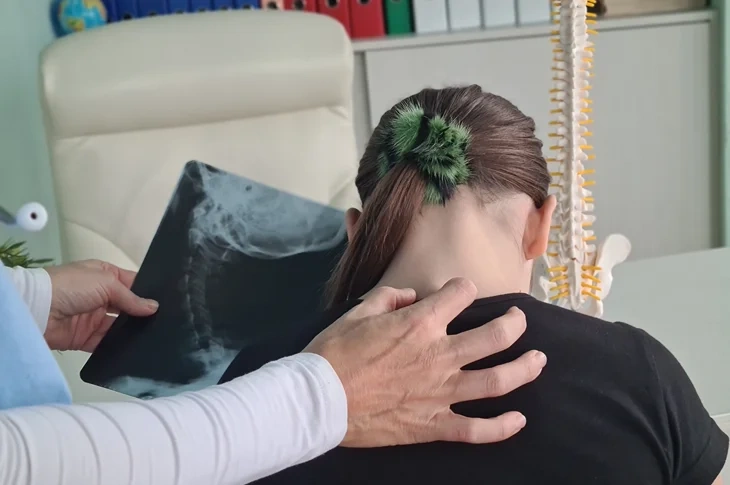
Photo: freepik.com/Freepik
Postponing a visit to a specialist in cases where the hands or feet tingle regularly must not be done under any circumstances, because a prolonged state of compression of the nerve fibres can cause their gradual and irreversible destruction. The first and most important step in such a situation is to seek help from your family doctor, who carries out the primary health examination.
During the visit, the doctor establishes the frequency of the symptoms, prescribes the necessary blood tests to check the general background of the body and metabolic indicators, and also prepares a referral for further specialised diagnostics in order to determine precisely whether the disorders are not based on some other hidden illness. An initial diagnosis established in good time makes it possible to avoid irreversible neurological complications, which would later require a far more complicated and lengthy rehabilitation process.
- Likewise, in medical practice it is often observed that numbness and tingling of the limbs can occur in parallel with or be directly related to other chronic problems. For example, during severe migraine attacks, fluctuations in vascular tone and general sensitivity of the nervous system can cause temporary disturbances not only in the face, but also radiate to the fingers and hands. To gain a full understanding of how these various processes mutually affect general well-being and how to act if the usual painkillers no longer bring relief, valuable insight is provided by the article "Frequent headaches and migraine: When do painkillers no longer help?".
In which cases does tingling of the hands and feet require the help of a neurologist?
If tingling of the hands or feet recurs regularly, an in-person neurologist consultation is precisely the main starting point for beginning purposeful and effective treatment. Only an experienced specialist can carry out a comprehensive neurological examination, check the reflexes, skin sensitivity and muscle strength in order to obtain the first clarity about the location of the possible damage.
Several highly effective diagnostic methods are used to establish a precise diagnosis, allowing even the smallest changes in the body to be seen in detail. Magnetic resonance imaging (MRI) helps to evaluate in detail the structures of the spine, the intervertebral discs and the soft tissues, clearly showing the sites of nerve root compression. Ultrasonography (USG) of the peripheral nerves allows the doctor to visually assess the condition of the nerve trunks along their entire length and to detect narrowings of the canals, while neurography and electromyography (EMG) measure the speed of conduction of electrical impulses with mathematical precision and determine how severe the functional nerve damage is.
Treatment methods: from massage to surgery
Depending on the diagnostic results obtained, the specialist chooses the most suitable type of help and offers several purposeful solutions:
- medication therapy and blocks: specific medications that stabilise the nervous system are prescribed to reduce acute inflammation and severe discomfort, whereas in the case of marked nerve compression, therapeutic blocks, that is, precise injections of medication directly into the area of damage, may be applied for the immediate elimination of swelling;
- physical procedures for tissue restoration: to reduce chronic tingling, promote local blood circulation and stimulate the self-renewal processes of the nerve fibres, specialised physical therapy is prescribed, using such methods as therapeutic laser therapy, magnetic therapy or electrophoresis;
- eliminating muscle tension with massage: to improve blood circulation and reduce mechanical pressure on the nerve roots, professional therapeutic massage is prescribed as an effective additional therapy, which can help to release the tense muscles of the neck and back;
- restoring range of motion and function: to ensure long-term well-being and to prevent repeated nerve compression, purposeful physiotherapy and individually designed therapeutic exercise are of great value, helping to strengthen the deep musculature, improve posture and relieve the tense joint areas;
- referral for further surgical help: in cases where conservative methods, exercises or medications do not bring results and a critical narrowing of the canal is diagnosed that threatens tissue destruction, the neurologist refers the patient in good time for a consultation with a neurosurgeon.
The final decision on the need for surgery is taken by the neurosurgeon, who specialises in the surgical treatment of severe nerve compression, in order to completely release the injured nerve fibre and restore its normal blood supply and functions.

Photo: freepik.com/Freepik
To gain an idea of exactly how the competences of these two specialists differ and in which cases the help of a neurologist is needed, and when one should go directly to a neurosurgeon, valuable insight is provided by the article prepared by the clinic's specialists "Neurologist or neurosurgeon: Which specialist should you turn to?", which describes in detail the role of both doctors and their cooperation in choosing a precise treatment path.
How to book a consultation and start purposeful treatment?
Freedom of movement, unimpaired sensation in the hands and a confident step in everyday life are the foundation of every person's full quality of life and well-being. The Adoria Health and Beauty Centre offers comprehensive neurological diagnostics and peripheral nerve treatment services, providing the support of highly qualified specialists, modern equipment and individually adapted care for every client. Book an in-person consultation with our experienced specialists by calling +371 67 315 000 or by conveniently filling in the electronic application form on the website, and let us professionally take care of your health and your joy of life!